
The Ultimate Guide to Getting Your Good Clinical Practice (ICH-GCP) Certification in Idaho: Everything You Need to Know in 2026-27
Idaho can be a smart clinical research entry point for professionals who understand how trials actually stay compliant when teams are small, sites are busy, documentation is imperfect, and patient access is uneven. A strong Good Clinical Practice foundation helps candidates prove they can protect participants, support clean records, and reduce preventable site risk. In 2026-27, the real advantage comes from pairing ICH-GCP training with clinical research certification in Idaho, site monitoring skills, data integrity habits, and role-specific interview proof.
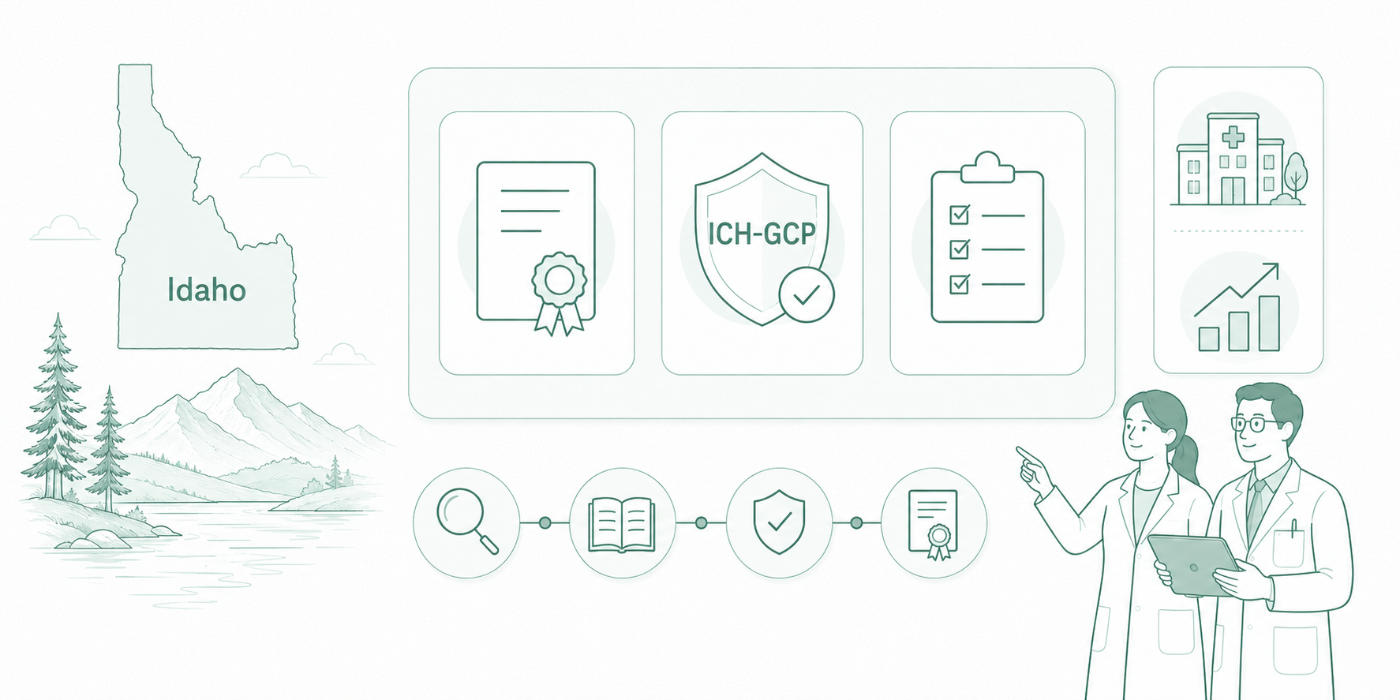
1. What ICH-GCP Certification Means for Idaho Clinical Research Careers
ICH-GCP certification shows that you understand the operating rules behind ethical and reliable clinical trials. For Idaho candidates, that matters because many research opportunities require professionals who can work carefully across patient communication, source documentation, privacy, protocol compliance, adverse event recognition, and sponsor communication. A certificate becomes more powerful when it connects directly to investigator responsibilities under GCP, protocol deviation prevention, clinical trial safety monitoring, and ethical conduct in clinical research.
The biggest career mistake is treating GCP as a checkbox. Hiring teams need proof that you can apply training when a consent form has the wrong version, a visit falls outside the protocol window, a participant reports a symptom, a monitor finds a missing note, or an EDC query exposes weak source documentation. That is where handling protocol deviations, clinical trial data review, GCP monitoring techniques, and interactive GCP compliance self-assessment become practical career tools.
Idaho’s research environment can create a different kind of pressure than larger coastal markets. Smaller teams may expect one person to understand scheduling, consent support, documentation, patient follow-up, regulatory coordination, and monitor preparation. That makes ICH-GCP useful for clinical research coordinators, research assistants, nurses, pharmacists, physicians, data coordinators, site managers, regulatory specialists, and CRA candidates. The strongest applicants connect GCP with patient retention strategies, clinical trial start-up checklists, clinical research career opportunities, and clinical research salary planning.
A good ICH-GCP certificate should help you explain what you would do before, during, and after a trial visit. Before the visit, you check eligibility, consent status, visit windows, protocol-required procedures, delegation, and supplies. During the visit, you protect participant understanding, capture source accurately, identify safety signals, and follow the approved protocol. After the visit, you resolve queries, document deviations, update logs, and prepare for monitor review. That workflow ties directly into site monitoring visits, remote and on-site monitoring, quality management strategies, and serious adverse event reporting.
| Idaho Career Scenario | Best GCP Focus Area | What to Prove | Pain Point to Avoid | Best CCRPS Resource |
|---|---|---|---|---|
| Entry-level clinical research assistant | Essential documents, confidentiality, visit support | You can assist without creating documentation or privacy risk. | Sounding helpful while missing the rules behind trial conduct. | Research assistant communication |
| New CRC candidate | Consent, eligibility, visit windows, source notes | You can protect study visits from preventable deviations. | Treating a protocol calendar like a normal clinic schedule. | Patient retention strategies |
| CRA trainee | Monitoring reports, issue escalation, follow-up letters | You can identify risk clearly and communicate it professionally. | Repeating GCP vocabulary without showing monitoring judgment. | Remote and on-site monitoring |
| Nurse entering clinical trials | Patient safety, AE recognition, informed consent | You can convert patient-care experience into research safeguards. | Assuming clinical experience automatically proves trial readiness. | Clinical trial safety monitoring |
| Pharmacist supporting investigational product | IP accountability, temperature logs, reconciliation | You understand how product control protects subject safety and data validity. | Separating pharmacy accuracy from inspection evidence. | IND application guide |
| Regulatory assistant | IRB files, amendments, version control | You can keep study documents current and inspection-ready. | Filing documents without understanding approval status. | Clinical trial amendments |
| Site manager | Delegation, staff training, oversight logs | You can prevent repeated errors across a small team. | Fixing problems verbally without documented corrective action. | Quality management strategies |
| Principal investigator | Oversight, safety review, delegation accountability | You know which responsibilities remain with the investigator. | Relying on sponsor or CRO oversight as a substitute for PI control. | Investigator responsibilities |
| Medical assistant moving into research | Vitals, specimen flow, visit documentation | You can support procedures while respecting protocol requirements. | Using normal clinic shortcuts inside a regulated study visit. | Site monitoring visit guide |
| Data coordinator | EDC queries, source consistency, audit trails | You understand why every correction needs a clean trail. | Treating query resolution as simple data entry. | Clinical trial data review |
| Rural-site support candidate | Participant access, scheduling, retention, documentation | You can maintain trial quality when visits require more coordination. | Ignoring how travel burden affects visit windows and retention. | CRC retention strategies |
| Remote trial support candidate | Hybrid visits, privacy, digital documentation | You can protect compliance outside traditional site workflows. | Thinking remote trial work has lighter documentation standards. | Virtual clinical trials |
| Project coordinator | Milestones, action items, vendor/site follow-up | You can connect timelines to compliance requirements. | Tracking dates without understanding site execution risk. | Clinical trial timelines |
| Quality assurance candidate | CAPA, root cause, SOP compliance | You can find system gaps before they become audit findings. | Writing corrective actions that fail to prevent recurrence. | GCP compliance self-assessment |
| Safety associate candidate | AE/SAE recognition, causality, reporting timelines | You can separate clinical concern from regulatory reporting duties. | Confusing severity, seriousness, causality, and expectedness. | SAE reporting procedures |
| Public health career changer | Ethics, recruitment, patient education, retention | You can support access without weakening consent quality. | Talking about community impact without showing protocol discipline. | Patient education resources |
| International medical graduate | U.S. trial workflow, source notes, participant safety | You can translate medical knowledge into regulated research operations. | Depending only on clinical background without GCP application. | Idaho clinical research certification |
| Research student | Core terminology, study team roles, ethics | You can explain where you fit in a trial team. | Collecting certificates without building a role-ready story. | Certificate programs compared |
| Site start-up assistant | Feasibility, activation, essential documents | You can help move a site from selected to study-ready. | Missing how start-up delays damage recruitment timelines. | Start-up checklist generator |
| Recruitment coordinator | Participant expectations, consent ethics, communication | You can recruit without overpromising benefits. | Using marketing language that creates consent-quality risk. | Clinical trial recruitment trends |
| Budget support role | Schedule of events, procedures, invoice logic | You understand how protocol design drives budget accuracy. | Separating finance work from study conduct realities. | Trial budget management |
| Inspection-readiness assistant | ISF/TMF, training logs, delegation, approvals | You can spot missing evidence before a monitor does. | Cleaning files late instead of maintaining readiness daily. | Clinical trial templates |
| CRO applicant | Cross-site quality, escalation, metrics, communication | You can think beyond one site and identify patterns. | Presenting only site-level language for sponsor-facing work. | Career opportunities map |
| Experienced healthcare worker rebuilding a resume | Transferable skills, documentation, compliance language | You can convert clinical experience into trial-specific value. | Making recruiters guess how your healthcare background transfers. | Clinical research salary tool |
| Candidate comparing Idaho with nearby markets | Location strategy, remote roles, specialty targeting | You can explain why Idaho fits your career path. | Applying across states with the same generic resume. | Washington certification guide |
| Candidate preparing for 2026-27 hiring | Certification timing, resume proof, interview scenarios | You can show fresh training and practical readiness. | Finishing training without updating resume, LinkedIn, and outreach. | Free training resources |
2. Who Should Get ICH-GCP Certified in Idaho?
ICH-GCP certification is valuable for anyone in Idaho who wants to work near study participants, study data, investigational products, regulatory documents, safety reporting, monitoring activity, or trial operations. That includes clinical research coordinators, clinical research assistants, CRAs, nurses, pharmacists, investigators, data coordinators, project coordinators, regulatory assistants, quality associates, and career changers entering through clinical research certification in Idaho, certificate program comparisons, career opportunity mapping, and free clinical research training.
Entry-level candidates should use GCP training to reduce employer doubt. A hiring manager may wonder whether you understand consent, privacy, visit documentation, and patient safety. Strong GCP language helps you answer that concern before it becomes rejection. A good entry-level profile connects GCP to research assistant communication, patient education resources, clinical trial start-up activities, and clinical trial templates.
Clinical research coordinators need GCP because coordinator mistakes can become sponsor queries, monitor findings, deviations, delayed visits, retention problems, and messy closeout work. A coordinator must know how to document what happened, escalate what matters, protect the consent process, and keep visit activity inside the protocol. That is why CRC candidates should pair ICH-GCP certification with patient retention strategies, protocol deviation handling, clinical trial budget management, and site monitoring visit preparation.
CRA candidates need GCP because monitoring requires judgment. A CRA must evaluate consent quality, source accuracy, data consistency, IP accountability, safety reporting, delegation, and unresolved action items. That means your interview answers should go beyond “I know GCP.” You should explain how you would identify risk, document findings, follow up with a site, and support corrective action. Build that language through risk-based monitoring, remote and on-site monitoring, clinical trial data verification, and investigator meeting strategy.
Investigators and site leaders need GCP because oversight sits at the center of trial credibility. Delegated tasks still require qualified staff, appropriate training, current documentation, and investigator awareness. A PI who understands GCP is better prepared to protect patients, review safety information, supervise delegation, and respond to sponsor concerns. That connects directly to PI site operations, investigator responsibilities, clinical trial data integrity, and investigator-initiated trials.
3. How to Choose the Right ICH-GCP Certification Course for 2026-27
The best ICH-GCP course should help you make better decisions inside real study situations. A weak course gives definitions and a certificate. A strong course teaches you what to check when consent is incomplete, what to document when a visit is missed, what to escalate when a participant reports a symptom, what to verify when EDC and source disagree, and what to review before a monitor visit. That practical layer connects GCP training to adverse event reporting, SAE procedures, protocol deviation corrective action, and quality management in clinical research.
A complete course should cover informed consent, IRB/IEC responsibilities, investigator duties, sponsor responsibilities, monitoring, essential documents, safety reporting, protocol compliance, confidentiality, data handling, audit readiness, and documentation standards. The important question is how well the course teaches application. When you study informed consent, you should understand timing, comprehension, version control, signatures, re-consent, and documentation. When you study amendments, connect them to clinical trial amendments, regulatory guidelines worldwide, GCP compliance self-assessment, and clinical research ethics resources.
Choose your course based on your next role. A CRC should pair GCP with visit management, patient retention, source documentation, and deviation prevention. A CRA should pair it with monitoring reports, SDV/SDR, risk review, and follow-up letters. A regulatory candidate should pair it with IRB files, version control, amendments, and essential documents. A safety candidate should pair it with AE/SAE workflows, narratives, causality, and timelines. Each path becomes stronger through CRC retention strategies, CRA monitoring mastery, IND/NDA submission training, and pharmacovigilance audit preparation.
After choosing a course, study with a job-conversion mindset. Build a list of role-specific proof statements while you learn. For example, a CRC candidate can write, “Trained in informed consent support, visit-window tracking, source documentation, AE awareness, and deviation escalation.” A CRA candidate can write, “Trained in GCP principles related to monitoring, source review, issue documentation, safety reporting, and site follow-up.” These statements connect certification to clinical research salary planning, professional association networking, online research communities, and Idaho clinical research certification.
What is your biggest Idaho ICH-GCP certification blocker right now?
Choose one. Your answer points to the fastest practical career fix.
4. Step-by-Step Plan to Get ICH-GCP Certified in Idaho
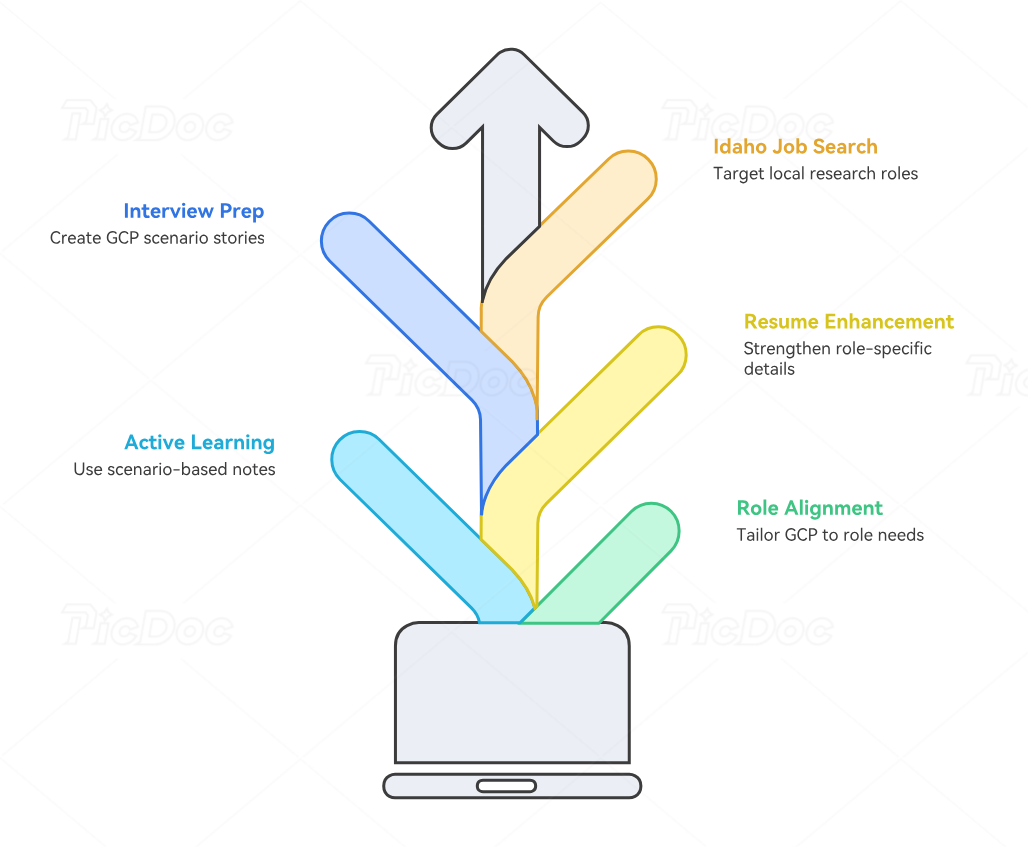
Start by choosing a target role before enrolling. The same GCP certificate should be framed differently for CRC, CRA, regulatory, safety, data, and site support pathways. A CRC needs consent, visit, and source-note language. A CRA needs monitoring, risk, and follow-up language. A regulatory candidate needs document control and amendment language. A safety candidate needs AE/SAE escalation language. Match your path with clinical research certification in Idaho, certificate program comparison, career opportunity mapping, and clinical research salary tools.
Complete the course with scenario notes instead of passive notes. For every GCP topic, write four lines: what I would check, what I would document, who I would escalate to, and what risk this prevents. For informed consent, check participant understanding, version control, signature timing, and re-consent needs. For source documentation, check accuracy, completeness, corrections, and consistency with EDC. For safety, check symptoms, seriousness, causality, reporting timelines, and PI awareness. This connects training to adverse event reporting, SAE reporting procedures, data integrity responsibilities, and GCP monitoring techniques.
Update your resume immediately after certification. Place ICH-GCP under certifications, then add role-specific proof in your summary and skills. Weak wording says “GCP certified.” Stronger wording says “Trained in ICH-GCP principles covering informed consent, protocol compliance, AE/SAE awareness, source documentation, investigator oversight, and inspection readiness.” A CRC resume should add visit support and patient communication. A CRA resume should add monitoring readiness and issue escalation. A regulatory resume should add amendments and document control. Strengthen each version through site monitoring visit guidance, risk-based monitoring strategies, clinical trial amendments, and clinical trial templates.
Build five interview stories from common GCP situations. Prepare one answer for a consent error, one for a missed visit window, one for an AE/SAE concern, one for an EDC/source discrepancy, and one for a monitor finding. Use a tight structure: situation, risk, action, documentation, escalation, prevention. This helps you sound practical instead of theoretical. The best stories connect to protocol deviation examples, handling protocol deviations, clinical trial data review, and quality management strategies.
Then apply with a focused Idaho strategy. Build a list of hospitals, specialty clinics, research sites, academic departments, CROs, remote trial vendors, regulatory teams, data groups, and patient recruitment organizations. Send applications that name the specific role and the GCP behaviors you can support. A strong message says, “I recently completed ICH-GCP training and am targeting CRC support roles where I can help with source documentation, visit tracking, consent workflows, and query prevention.” Pair that outreach with professional research associations, online clinical research communities, free research training, and global clinical research career opportunities.
5. How to Turn Idaho ICH-GCP Certification Into a Stronger Career Move
The certificate becomes useful when it changes how you position yourself. Idaho candidates should avoid broad job-search language like “interested in clinical research” and replace it with role-specific value. For CRC roles, focus on consent, source notes, visit tracking, patient communication, and deviation prevention. For CRA roles, focus on source review, monitoring follow-up, issue documentation, and site risk. For regulatory roles, focus on IRB submissions, version control, essential documents, and amendments. Each path can be strengthened with CRC patient retention, CRA monitoring mastery, regulatory compliance guidance, and clinical trial start-up tools.
Healthcare workers should translate existing experience aggressively. A nurse can connect assessment skills to AE recognition, participant safety, and consent questions. A pharmacist can connect medication expertise to investigational product accountability, storage, reconciliation, and protocol-specific dispensing. A medical assistant can connect vitals, specimen handling, scheduling, and patient communication to visit execution. An administrator can connect file discipline, coordination, and follow-up to regulatory support. These bridges become stronger when tied to clinical trial safety monitoring, IND application basics, site monitoring visits, and collaboration strategies for research assistants.
Career changers should build a small proof portfolio. This can include a mock visit checklist, a sample deviation assessment, a consent-version review checklist, a source-to-EDC discrepancy example, and a simple AE escalation flow. The portfolio shows that you understand practical trial pressure before your first formal role. It also helps you answer interviews with specifics. Use resources like protocol deviation corrective actions, clinical trial data review, GCP compliance self-assessment, and directory of clinical trial templates.
Candidates aiming for remote or hybrid roles should position GCP as a trust signal. Remote support still requires privacy awareness, clear documentation, time-zone discipline, careful communication, and fast escalation. A remote trial assistant, data coordinator, regulatory assistant, recruitment coordinator, or CRO support candidate can use ICH-GCP to prove they understand compliance beyond office walls. That path aligns with virtual clinical trials, trial technology innovations, remote monitoring visits, and clinical research career opportunities.
The strongest Idaho strategy is direct: earn ICH-GCP certification, choose one target role, convert training into resume proof, prepare scenario answers, build a small proof portfolio, and apply with role-specific language. The candidates who struggle usually finish training and wait for the certificate to speak for them. The candidates who move faster use GCP to show judgment, readiness, and risk awareness. That readiness becomes clearer when supported by clinical research certification in Idaho, clinical research salary comparison, clinical research professional associations, and best online communities for clinical researchers.
6. FAQs About Getting Your ICH-GCP Certification in Idaho
-
ICH-GCP certification is highly useful because it shows that you understand participant protection, informed consent, source documentation, protocol compliance, safety reporting, and inspection readiness. Employers still look for practical readiness, so the certificate should be paired with role-specific proof. A candidate targeting CRC work should connect GCP to patient retention, site monitoring visits, and Idaho clinical research certification.
-
Many GCP courses can be completed quickly, but the career value comes from understanding how the rules apply during real study work. Spend extra time on informed consent, AE/SAE reporting, protocol deviations, investigator responsibilities, essential documents, and monitoring expectations. Stronger preparation comes from reviewing adverse event reporting, SAE procedures, protocol deviation examples, and GCP compliance self-assessment.
-
CRC, CRA, regulatory assistant, research assistant, data coordinator, safety associate, site manager, nurse researcher, pharmacist, and investigator roles all benefit from ICH-GCP certification. The best pathway depends on your background and target role. CRC candidates should study patient retention strategies, CRA candidates should study risk-based monitoring, regulatory candidates should study clinical trial amendments, and safety candidates should study clinical trial safety monitoring.
-
Yes, especially when you translate your background into trial-relevant proof. Healthcare, public health, pharmacy, lab, administrative, customer-service, data, and patient-facing experience can support entry-level applications when framed around documentation, confidentiality, scheduling, communication, and compliance. Build a stronger bridge with research assistant communication strategies, clinical trial start-up activities, clinical trial templates, and free clinical research training.
-
List it under certifications or training, then reinforce it in your summary and skills section. Strong resume wording should mention informed consent, protocol compliance, AE/SAE awareness, source documentation, investigator oversight, and inspection readiness. For CRC roles, add visit tracking and source notes. For CRA roles, add monitoring readiness and issue follow-up. For regulatory roles, add amendments and document control. Support that language with certificate program comparisons, career opportunity mapping, and salary planning.
-
Study the workflow tied to your target role. CRC candidates should study visit management, patient retention, deviations, and monitoring visits. CRA candidates should study monitoring reports, source review, risk-based monitoring, and follow-up communication. Regulatory candidates should study amendments, essential documents, and submission flow. Safety candidates should study AE/SAE processing and pharmacovigilance. Useful next resources include site monitoring visits, risk-based monitoring, IND/NDA submissions, and pharmacovigilance audits.
