
Inside the Explosive Rise of Patient Influencers in Clinical Research
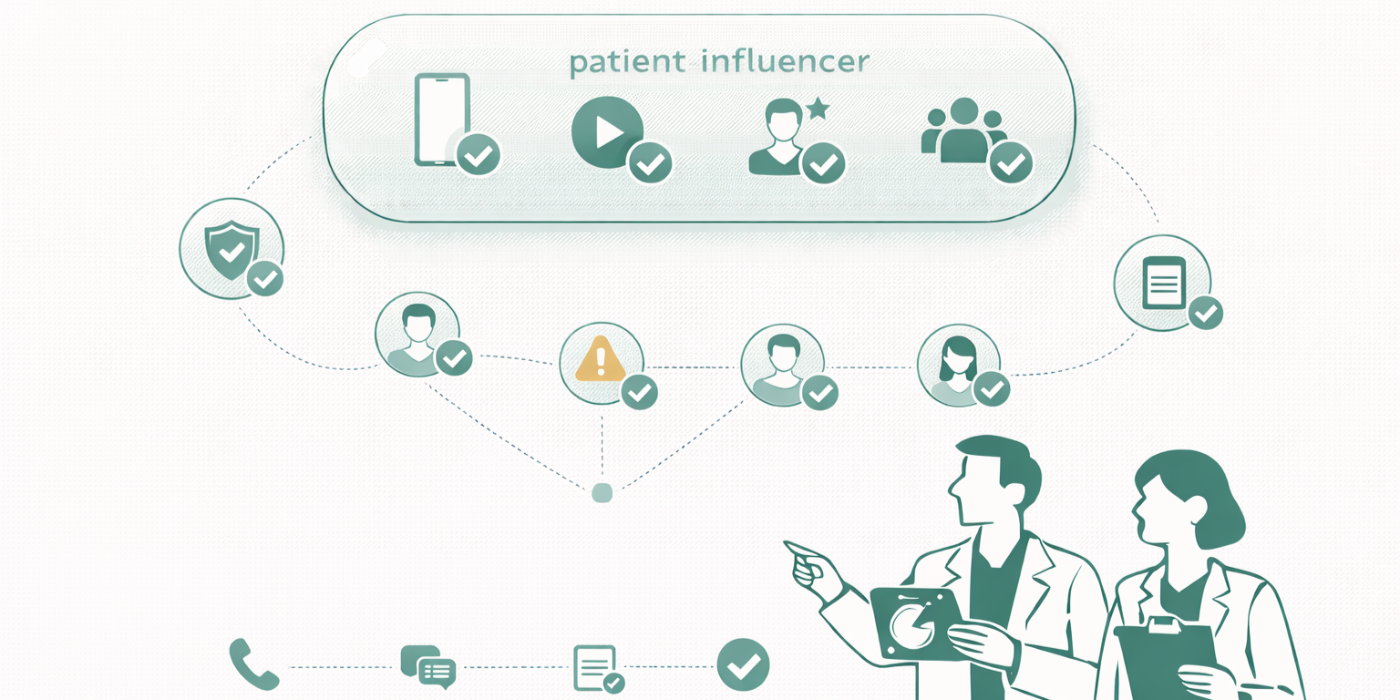
Patient influencers are no longer a side phenomenon in clinical research. They are becoming a force that can reshape recruitment speed, protocol relevance, trust formation, retention quality, and even sponsor reputation. The real issue is not whether patient influencers matter. It is whether sponsors, CROs, sites, and advocacy teams know how to work with them without turning community trust into compliance risk. In an industry where weak engagement can delay enrollment, inflate dropout, and distort diversity goals, patient influencers are emerging as both an opportunity and a governance test.
When handled carelessly, they create hype, confidentiality concerns, unbalanced expectations, and ethical gray zones. When handled well, they can help research teams surface barriers that traditional outreach misses, strengthen patient-facing communication, and build more human recruitment pathways than many paid campaigns ever achieve.
1. Why patient influencers are suddenly becoming impossible for clinical research to ignore
The rise of patient influencers sits at the intersection of several long-building shifts in the industry. First, participants no longer discover trials only through physicians, hospital systems, or static registries. They now learn through communities, disease-specific creators, caregivers, condition advocates, and lived-experience educators. That matters because trial awareness is not the same as trial trust. A patient may find a study through a listing, but often decides whether it feels credible through someone who has lived the problem.
This shift is especially important in an environment shaped by tighter recruitment economics, more demanding retention strategies, and growing attention to decentralized engagement. The broader industry already recognizes that enrollment friction, retention drop-off, and real-world patient burden are not soft issues but operational issues, which is why topics like clinical trial patient recruitment and retention trends, real-world evidence integration, clinical research technology adoption, and state of clinical trials are becoming central conversations rather than side reports.
Patient influencers thrive because they do something that many institutional messages fail to do: they translate technical research language into emotionally legible relevance. A protocol may describe visit schedules, inclusion criteria, endpoint collection, and adverse event monitoring. A patient influencer explains what repeated travel means when fatigue is severe, what diary burden feels like during flares, or why a consent form sounds frightening to a newly diagnosed family. That translation layer can radically improve how research teams think about informed consent procedures, patient safety oversight, protocol management, and GCP compliance strategies for coordinators.
What makes this rise explosive is not follower count alone. It is that patient influencers often hold three kinds of leverage at once. They have attention leverage because communities already follow them. They have interpretation leverage because they frame what research means in plain language. And they have trust leverage because their audience often sees them as less filtered than sponsor communications. In an industry where weak trust can destroy enrollment efficiency, that combination is powerful.
Another reason the trend is accelerating is that the old outreach model is showing its limits. Static site flyers, generic awareness campaigns, and physician-only referral logic are often too slow, too broad, or too disconnected from actual patient behavior. Teams exploring clinical trial volunteer registries and platforms, networking groups and forums, LinkedIn groups for clinical research professionals, and even emerging discussions around how TikTok will revolutionize clinical trial recruitment are all reacting to the same underlying truth: discovery pathways have changed.
At the same time, patient influencers are not automatically good for research. Some are highly responsible educators. Others are charismatic amplifiers with weak scientific discipline. Some know how to discuss uncertainty, safety, eligibility, and boundaries. Others oversimplify results, create false hope, or unintentionally pressure desperate patients. That is why the real strategic question is not whether to use patient influencers, but how to classify them, vet them, brief them, contract them, monitor them, and learn from them without undermining ethics.
| Patient Influencer Type | Best Use in Clinical Research | Strengths | Primary Risks / Failure Modes | How to Work With Them Well |
|---|---|---|---|---|
| Disease education creator | Awareness and trial literacy | Explains complex topics clearly | May overstate personal interpretation | Give approved educational boundaries |
| Rare disease advocate | Niche recruitment support | Deep community trust | Small audience can feel over-targeted | Use respectful, low-pressure engagement |
| Caregiver voice | Pediatric or dependent populations | Highlights burden outside clinic walls | May generalize from one family journey | Use for burden mapping and material review |
| Trial experience storyteller | Participant journey content | Makes trial process tangible | Can unintentionally imply expected outcomes | Review content for balanced framing |
| Data-savvy patient educator | Endpoint and study design explanation | Can improve scientific understanding | May speak beyond evidence | Provide source hierarchy and review checkpoints |
| Community moderator | Forum-based trial visibility | Understands group norms | Can trigger backlash if audience senses promotion | Lead with education, not campaign language |
| Condition-specific podcaster | Long-form study awareness | Allows nuance and context | Off-script comments can create compliance issues | Use guided talking points and disclaimers |
| YouTube patient explainer | Deep-dive education | High discoverability over time | Comments can spread misinformation | Plan moderation and FAQ responses |
| TikTok symptom educator | Early awareness among younger audiences | Fast reach and relatable framing | Short format can oversimplify eligibility | Keep call-to-action factual and narrow |
| Instagram community builder | Supportive community engagement | Strong emotional trust | Visual storytelling may glamorize treatment journeys | Focus on process education over inspiration alone |
| Substack or newsletter advocate | Detailed thought leadership | Engaged, higher-intent readership | Can become opinion-heavy | Use evidence-backed review structure |
| Patient advisory leader | Protocol design feedback | Strong systems perspective | May be treated as symbolic only | Tie advice to documented design decisions |
| Advocacy nonprofit spokesperson | Broader educational campaigns | Institutional credibility | Messaging can become too formal | Blend credibility with patient-centered language |
| BIPOC health equity creator | Inclusive recruitment conversations | Can surface trust barriers others miss | Tokenization risk is high | Center partnership, not optics |
| Rural access advocate | Decentralized and hybrid trial messaging | Highlights transport and access barriers | May expose gaps sponsors cannot solve quickly | Use for feasibility realism |
| Chronically ill lifestyle creator | Daily burden storytelling | Humanizes visit schedules and symptom burden | Brand collaborations may dilute trust | Require transparent disclosure practices |
| Patient scientist hybrid | Sophisticated protocol commentary | Bridges science and lived experience | Audience may overweight one expert voice | Balance with multiple perspectives |
| Care pathway educator | Explaining where trials fit in treatment journey | Improves contextual decision-making | Can accidentally imply standard-of-care advice | Separate education from medical guidance |
| Survivorship advocate | Long-term outcome awareness | Adds perspective beyond enrollment | Can make one outcome seem universal | Anchor messaging in variability and uncertainty |
| Misinformation debunker | Countering myths about trials | Builds credibility through correction | Can become combative | Use calm evidence-first tone |
| Private community host | Feedback loops and listening | High candor from members | Privacy expectations are sensitive | Clarify boundaries before any engagement |
| Research participation ambassador | General trial literacy | Normalizes participation questions | May blur awareness and recruitment | Use distinct educational and referral pathways |
| Community health interpreter | Culturally adapted messaging | Improves resonance in underserved groups | Translation may miss regulatory nuance | Provide reviewed multilingual materials |
| Patient entrepreneur | Platform-enabled advocacy reach | Strong operational execution | Commercial incentives may overshadow mission | Vet alignment and conflicts carefully |
| Micro-influencer with high trust | Targeted condition-specific engagement | Often higher credibility than large creators | Limited scale | Use as part of a portfolio strategy |
| High-reach celebrity patient voice | Mass awareness surges | Huge visibility | Attention can exceed operational capacity | Only use with robust intake systems |
2. What patient influencers actually do better than traditional recruitment channels
Many research leaders misunderstand the value of patient influencers because they evaluate them like ad inventory instead of community infrastructure. Their strongest contribution is rarely raw impressions. Their strongest contribution is friction reduction. They reduce confusion, fear, passivity, and distrust at the exact points where many eligible participants disappear.
Traditional channels often fail in predictable ways. Job-like trial listings are too clinical. Sponsor messaging feels filtered. Site outreach may arrive late. Physician referral depends on time-constrained clinicians remembering a study at the right moment. Even strong awareness campaigns can break down because they answer the sponsor’s questions, not the patient’s. Patient influencers reverse that sequence. They start with the patient’s lived logic: Will this fit my life? Can I trust the team? What happens if I get worse? Will I be treated like a person or processed like a record?
That is why patient influencers can improve performance across several functions at once. They can support earlier awareness, more realistic expectation-setting, stronger community education, and better-quality inbound interest. In some cases, they can even sharpen protocol design before recruitment begins by identifying burden points that would otherwise surface later as dropout or screening failure. Teams serious about clinical trial success rates by therapeutic area, resource allocation in clinical trials, vendor management, and stakeholder communication should see patient influencers as part of an operational design conversation, not just a marketing tactic.
Another overlooked advantage is language correction. Patient influencers often expose when research teams are using technically accurate but psychologically ineffective wording. They know when “subject” feels cold, when “compliance” sounds punitive, when “burden” is minimized, or when “optional” sounds mandatory because the surrounding tone is coercive. That insight can improve patient-facing materials long before an IRB-approved message reaches the public. It also connects directly to better execution in areas like regulatory and ethical responsibilities for principal investigators, adverse event handling, medical monitor adverse event reviews, and essential training requirements under GCP guidelines.
Patient influencers also create a different type of social proof. Conventional research communications often say a study is important. A respected patient voice explains why a research question matters to daily life, caregiver stress, diagnostic uncertainty, or symptom instability. That difference is enormous. People rarely act because an institution says something is valuable. They act because someone they trust makes the value concrete.
There is also a portfolio effect. One patient influencer may not transform a study, but a network of well-selected influencers can help a sponsor understand diverse barriers across geography, culture, disease stage, care setting, and socioeconomic reality. This is especially relevant for studies trying to improve reach beyond major academic centers or traditional site ecosystems. It aligns with broader conversations about top emerging markets for clinical trials, global clinical trial market growth projections, decentralized clinical trials, and wearable tech in future trials.
The deepest value, however, is strategic honesty. Good patient influencers force research teams to confront a painful truth: many studies are hard to join not because patients are apathetic, but because the experience is confusing, inconvenient, or emotionally misframed. If a patient influencer repeatedly surfaces fear around placebo-controlled trials, confusion around primary vs secondary endpoints, or distrust around blinding in clinical trials, the answer is not to dismiss the audience. The answer is to improve the communication architecture.
3. The hidden risks: where patient influencer strategies can fail hard in clinical research
The rise of patient influencers creates real upside, but it also creates risks that many organizations are not equipped to manage. The first and most obvious is compliance drift. A patient influencer may begin with approved talking points and then add personal interpretation that changes the meaning. In a sensitive therapeutic area, one sentence of overstatement can create false hope, encourage self-screening assumptions, or blur the difference between research participation and treatment access.
This matters because clinical research operates under ethical and procedural expectations that do not tolerate casual amplification. Communication around participation intersects with GCP compliance for CRAs, auditing and inspection readiness, managing clinical trial documentation, and regulatory submissions in pharmacovigilance. If claims, disclosures, compensation terms, or referral language are handled loosely, an influencer strategy can move from innovative to reckless very fast.
The second risk is trust extraction. Some organizations see patient influencers as a shortcut to community access rather than a partner in ethical engagement. That approach fails because audiences sense when a creator is being used as a conduit rather than respected as a stakeholder. Once a patient community feels harvested, backlash can spread across disease groups, advocacy channels, and social platforms. Trust built over years can be burned in a week.
Third, there is the problem of representativeness. A compelling patient voice is not the same as a representative patient population. A creator may be articulate, visible, digitally fluent, and highly engaged, yet still reflect only one slice of the disease experience. If sponsors mistake visibility for representativeness, they may build materials that resonate with a vocal subset while missing older adults, lower-literacy groups, rural populations, caregivers, or patients with unstable access to specialist care. This is where teams need deeper listening beyond influencer partnerships, including structured learning from clinical trial sites and SMOs, academic medical centers with active trials, hospitals and health systems running trials, and patient recruitment companies and tech solutions.
Fourth, there is a data handling risk. Patient influencers often operate in semi-public spaces where community members volunteer highly sensitive details. If a sponsor or partner team enters those spaces without clear boundaries, the line between listening and collecting can become dangerously thin. That is why community engagement plans must be aligned with privacy expectations, moderation protocols, and escalation rules.
Fifth, organizations often underestimate operational capacity. A successful patient influencer campaign can generate more interest than a site network can process. That leads to delayed responses, poor screening experiences, lost trust, and public frustration. A surge in attention is not a win if the intake pathway fails. Research leaders need the same operational seriousness they would apply to top CRO market share and industry structure, remote monitoring tools, clinical data management and EDC platforms, and contract research vendors.
Finally, there is the reputational risk of bad fit. Not every patient influencer is appropriate for every study. A creator who thrives on emotional intensity may damage nuanced education. A creator who is excellent at advocacy may be poor at balanced discussion of uncertainty. A creator who built trust through anti-establishment rhetoric may create sponsor conflict even if their community reach is undeniable. Vetting must go beyond follower counts. Teams need to assess communication discipline, evidence behavior, audience dynamics, conflict of interest patterns, and willingness to stay inside ethical guardrails.
4. How sponsors, CROs, and sites should build a patient influencer strategy that is ethical and actually useful
A strong patient influencer strategy starts with a mindset shift. Do not begin by asking which creator can get the most attention. Begin by asking which research problem needs solving. Are you trying to improve early awareness in a stigmatized condition? Clarify visit burden before consent? Learn why eligible patients never convert? Build community literacy around endpoints or randomization? Reduce dropout by aligning expectations? The right patient influencer strategy is built around a specific research bottleneck.
Once the bottleneck is clear, segment the role. Some influencers are best for listening. Others are better for education. Others can review patient materials. Others can help explain the lived reality of symptoms, scheduling strain, or caregiver burden. Few should be treated as one-size-fits-all ambassadors. Research teams already understand role segmentation in areas like CRA career paths, CRC responsibilities, clinical data manager pathways, and regulatory affairs specialist roadmaps. They need to apply the same discipline here.
Next comes vetting. Good vetting asks difficult questions. Does the influencer distinguish personal experience from general evidence? Do they handle uncertainty responsibly? Have they ever promoted questionable interventions? How does their audience respond to risk discussions? Do they disclose partnerships clearly? Are they respected by people who disagree with them, or only by an echo chamber? This stage should include medical, legal, regulatory, patient engagement, and operations perspectives, not just communications.
Briefing matters even more. A proper creator brief in clinical research is not a brand mood board. It is an ethics and execution document. It should define what the study is, what can be said, what cannot be implied, how participation should be described, where patients should go for official information, how disclosures must appear, what to do if medical questions arise, and how adverse event or safety-related comments must be escalated. Teams comfortable with drug safety reporting timelines, aggregate reports in pharmacovigilance, essential adverse event reporting techniques for CRCs, and handling clinical trial audits should treat creator governance with the same seriousness.
Compensation needs transparency. Patient influencers should not be expected to provide labor for free simply because it is mission-linked. But compensation must be structured so it does not create coercive incentives or credibility confusion. Payment should reflect expertise, time, review effort, and deliverables, not hidden performance pressure. Contracts should clarify boundaries, approvals, data handling expectations, disclosure standards, and termination conditions.
Measurement should also be smarter than vanity metrics. Likes and views tell very little about research value. Better metrics include quality of inbound questions, content comprehension, referral quality, screening fit, dropout reasons, message resonance by subgroup, protocol burden themes surfaced, and whether materials improve after patient-informed revisions. A sophisticated sponsor should learn as much from what patient influencers reveal about communication failure as from any enrollment spike.
Most importantly, patient influencer strategy should not end at recruitment. These voices can improve retention messaging, follow-up communication, burden reduction ideas, and protocol usability. If teams only activate patient influencers when they need enrollment and ignore them during design or retention, they are missing the highest-value use case.

5. What the future of patient influencers means for recruitment, trust, protocol design, and career roles
Patient influencers are likely to become part of a broader shift in which clinical research becomes more networked, more conversational, and more visibly shaped by participant experience. That does not mean science will become softer. It means successful science will need better interfaces with real human decision-making.
Recruitment will change first. Over time, more studies will likely combine formal recruitment infrastructure with creator-led education, community partnerships, platform-based outreach, and condition-specific digital pathways. But the highest-performing models will not be the loudest. They will be the most trusted. Trust will increasingly belong to teams that can explain research clearly, respond quickly, and show that patient input changed something tangible.
Protocol design will also evolve. Patient influencers can spotlight where visit cadence is unrealistic, where digital reporting is exhausting, where inclusion language is alienating, and where endpoint logic feels detached from lived improvement. That input can make studies more feasible before launch. It also complements emerging conversations around AI-powered clinical trials, predicting patient dropout, how AI will predict trial failures, and smart pills and digital biomarkers. Technology may detect burden patterns, but patient voices explain why those patterns exist.
Career roles may shift as well. Clinical operations teams, patient engagement specialists, coordinators, site leaders, medical affairs teams, and even monitors may need stronger competence in digital community behavior, trust dynamics, and patient-centered communication. The professionals who adapt will not just understand protocols. They will understand how protocols are perceived outside institutional walls. That perspective could become increasingly relevant across roles from clinical trial manager to clinical research project manager, from medical science liaison to clinical compliance officer.
There is also a larger power shift underway. Historically, institutions controlled most clinical research narratives. Patient influencers diffuse that control. They can praise, question, reinterpret, and challenge research conduct in public. For organizations that have relied on one-way communication, that may feel uncomfortable. For organizations willing to learn, it is a massive advantage. The fastest-growing trust edge in research may belong to teams that can listen without defensiveness.
This shift also intersects with more radical ideas already entering the field, including patient-run clinical trials, mind control and neuroscience futures in trials, and broader debates around who gets to shape research priorities. Patient influencers are not the endpoint of this transformation. They are an early sign that lived experience is becoming structurally harder for the industry to ignore.
The organizations that win will be the ones that understand a crucial distinction: patient influence is not simply attention power. It is legitimacy power. And in a field where recruitment friction, safety anxiety, and institutional skepticism can quietly damage outcomes, legitimacy is not cosmetic. It is infrastructure.
6. FAQs
-
A patient influencer in clinical research is a person with lived experience of a condition, caregiving role, or treatment journey who has built a trusted audience and can shape how people understand trials, study participation, and research-related decisions. Their value is not just reach. It is credibility, translation skill, and the ability to surface concerns that traditional sponsor messaging often misses.
-
No. Recruitment is only the most visible use case. Patient influencers can also help research teams improve educational materials, identify protocol burden, stress-test consent language, explain participation realities, support retention communication, and reveal why eligible patients hesitate. In many cases, their highest value comes before launch, when their feedback can prevent costly communication mistakes.
-
The biggest mistake is treating them like promotional channels instead of informed partners. That leads to shallow campaigns, poor vetting, weak disclosure controls, and community backlash. The stronger approach is to define the research problem first, choose the right type of influencer for that problem, and build ethical guardrails around content, referrals, disclosures, and escalation pathways.
-
Yes, absolutely. Risks include overstating study benefits, blurring research with treatment, discussing safety issues improperly, mishandling disclosures, and triggering privacy concerns in community spaces. That is why any patient influencer strategy needs clear briefs, approval rules, response workflows, escalation plans, and close alignment with medical, legal, regulatory, and operations teams.
-
Look beyond audience size. Assess whether they communicate uncertainty responsibly, separate personal experience from universal claims, disclose partnerships clearly, engage respectfully with their audience, avoid sensationalism, and show a pattern of evidence-aware behavior. A smaller creator with deep trust and strong discipline is often more valuable than a larger voice built on emotional volatility.
-
Very likely, yes. As clinical trials become more decentralized, digitally mediated, patient-centered, and publicly discussed, trusted patient voices will keep shaping awareness, expectations, and community response. The organizations that adapt early will be better positioned to improve recruitment quality, participant trust, and protocol realism without sacrificing ethical rigor.
