The Ultimate Guide to Getting Your Good Clinical Practice (ICH-GCP) Certification in Ohio: Everything You Need to Know in 2026-27
Ohio clinical research careers reward people who can protect participants, document decisions, and work cleanly under sponsor, IRB, and FDA expectations. A strong Good Clinical Practice foundation helps you speak the language of consent, delegation, source data, deviations, safety, monitoring, and audit readiness before a hiring manager has to teach you the basics. In 2026-27, ICH-GCP certification is a practical signal for Ohio candidates targeting clinical research certification, CRC work, CRA roles, and regulated trial operations.
1. Why Ohio ICH-GCP Certification Matters in 2026-27
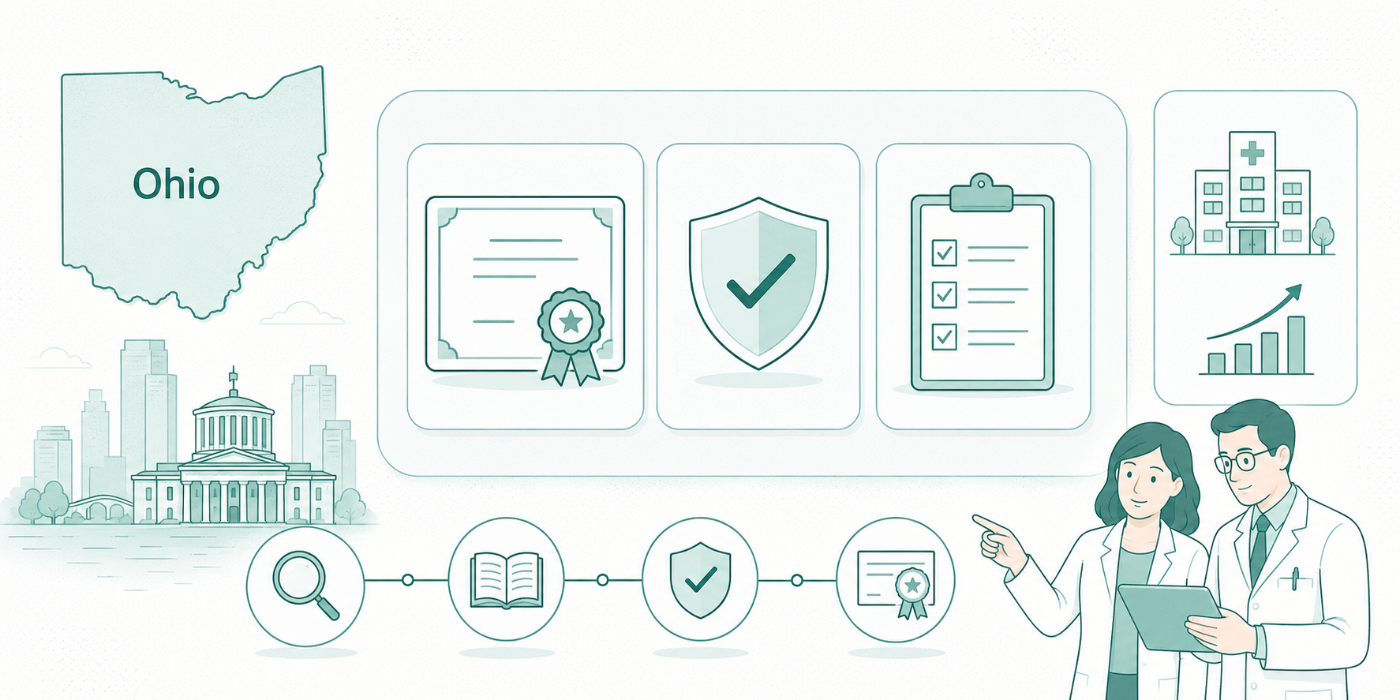
Ohio has a strong clinical research footprint because candidates can build experience around academic medical centers, cancer programs, device studies, community sites, site networks, and remote trial operations. Cleveland Clinic lists many clinical trials across therapeutic areas, while Ohio State invites participants to browse research studies and cancer clinical trials, which signals how active the state’s research ecosystem is for people preparing for clinical research careers, site operations roles, monitoring careers, and trial safety work.
ICH-GCP certification helps Ohio candidates because entry-level clinical research jobs often punish vague enthusiasm. “I want to help patients” sounds good, but hiring teams need proof that you understand informed consent timing, ALCOA-C data principles, protocol deviations, adverse event reporting, delegation logs, essential documents, and escalation discipline. The FDA’s Good Clinical Practice materials emphasize that clinical investigators must comply with applicable statutes and regulations, while the FDA’s clinical trial guidance page explains that guidance documents reflect current thinking on clinical trials, GCP, and human subject protection.
A serious Ohio applicant should treat ICH-GCP training as the first layer of professional credibility, then build role-specific proof around protocol deviations, SAE reporting, investigator responsibilities, and data integrity. The job market is crowded with people who list “detail-oriented” on resumes; the stronger candidate shows exactly how they would prevent a consent error, catch a missing signature, escalate a safety concern, and protect source-to-EDC consistency.
| Decision Area | What Ohio Candidates Should Do | Pain Point It Solves | Best CCRPS Resource to Use |
|---|---|---|---|
| GCP baseline | Complete ICH-GCP training before applying to site roles. | Stops your resume from reading like healthcare interest with no trial literacy. | GCP ethics and patient safety |
| Ohio positioning | Connect certification to local clinical research demand. | Prevents generic applications that ignore the Ohio research ecosystem. | Ohio clinical research certification |
| CRC pathway | Learn visit flow, scheduling, source notes, and delegation basics. | Fixes the “certified but unusable on site” problem. | site monitoring visits for coordinators |
| CRA pathway | Study monitoring, SDV, issue escalation, and follow-up letters. | Builds proof for candidates moving from coordinator to monitor. | remote and on-site monitoring |
| Protocol control | Practice identifying deviations, root causes, and corrective actions. | Stops preventable deviations from becoming inspection findings. | protocol deviation examples |
| Safety readiness | Understand AE, SAE, causality, expectedness, and reporting timelines. | Protects participants and prevents dangerous reporting delays. | SAE reporting procedures |
| PI support | Learn what investigators can delegate and what they still own. | Prevents site teams from treating delegation as responsibility transfer. | investigator responsibilities under GCP |
| Consent quality | Map consent timing, version control, re-consent, and documentation. | Targets one of the most damaging trial compliance failures. | GCP compliance guidelines |
| Data integrity | Use ALCOA-C thinking in every source note and EDC correction. | Stops messy documentation from weakening trial credibility. | clinical trial data integrity |
| Startup readiness | Learn essential documents, approvals, logs, contracts, and activation tasks. | Helps candidates support studies before first patient first visit. | trial startup checklist |
| Budget awareness | Understand pass-through costs, invoice triggers, and visit payments. | Prevents coordinators from missing revenue tied to completed work. | CRC budget management |
| Monitoring fluency | Learn how CRAs review source, consent, IP, deviations, and action items. | Makes site candidates easier to train and easier to trust. | GCP monitoring techniques |
| RBM knowledge | Understand risk-based monitoring and critical-to-quality factors. | Prepares candidates for modern oversight beyond box-checking. | risk-based monitoring strategies |
| Regulatory awareness | Know how IND, amendments, IRB approvals, and sponsor requirements connect. | Prevents fragmented thinking across regulatory documents. | IND application guide |
| Amendment control | Track protocol changes, training evidence, and version implementation. | Prevents teams from using expired procedures after amendment approval. | clinical trial amendments |
| Pharmacovigilance bridge | Learn safety case language if targeting drug, vaccine, or oncology studies. | Opens a path beyond site coordination into safety operations. | pharmacovigilance best practices |
| Audit readiness | Keep training, delegation, consent, correspondence, and deviations inspection-ready. | Reduces panic when sponsors, auditors, or inspectors ask for proof. | audit and inspection techniques |
| Quality mindset | Use root-cause analysis, CAPA thinking, and preventive controls. | Moves you from task-doer to quality-focused operator. | clinical research quality management |
| Project timeline skills | Track milestones, recruitment, monitoring visits, database locks, and closeout. | Helps candidates understand how one missed task delays a trial. | trial timelines and milestones |
| Patient retention | Learn reminder systems, visit burden reduction, and missed-visit prevention. | Protects enrollment value after the patient signs consent. | patient retention strategies |
| Technology literacy | Understand EDC, eConsent, ePRO, CTMS, remote monitoring, and data flows. | Stops candidates from looking lost in hybrid and decentralized trials. | trial technology innovations |
| Self-assessment | Check your GCP weak spots before interviews expose them. | Turns hidden gaps into targeted study tasks. | GCP compliance self-assessment |
| Certification comparison | Compare CCRPS, ACRP, and SOCRA based on career stage. | Prevents buying a credential before knowing what role it supports. | clinical research certificate programs compared |
| Free learning stack | Add webinars, templates, and directories around your certification. | Builds interview talking points without expensive extra programs. | free clinical research training resources |
| Template fluency | Study CRF, SOP, protocol, and tracking templates. | Helps new candidates recognize documents before they handle live studies. | clinical trial templates directory |
| Career networking | Join professional communities with a specific learning question. | Avoids noisy groups where beginners collect posts instead of relationships. | clinical research communities |
| Salary clarity | Benchmark titles before accepting coordinator, assistant, or data roles. | Prevents underpricing yourself because the job title sounds entry-level. | clinical research salary tool |
2. What ICH-GCP Certification Actually Proves to Ohio Employers
ICH-GCP certification should prove that you understand clinical research as a controlled system, not a collection of administrative tasks. The finalized ICH E6(R3) guideline describes GCP as a unified standard supporting mutual acceptance of trial data, and FDA notes that E6(R3) encourages technology and innovation while staying relevant as trial methods evolve. For Ohio applicants, that means your GCP certification should connect ethics, documentation, risk-based thinking, trial technology, quality management, and monitoring readiness.
A weak certificate says, “I watched modules.” A strong certificate says, “I can explain why a subject cannot be screened before proper consent, why source corrections need attribution, why delegation must match training, why protocol-required assessments must be documented on time, and why unresolved action items can become risk signals.” That difference matters when you apply for CRC roles, CRA training pathways, data review jobs, or pharmacovigilance roles.
Your certification also helps you avoid the beginner mistake of memorizing rules without understanding consequences. A missing date on an informed consent form can affect subject eligibility. A late SAE report can damage participant protection and sponsor compliance. A delegation log mismatch can show that a task was performed by someone without documented authorization. A poorly explained deviation can hide a process failure that repeats across patients. When you study through this lens, adverse event reporting, protocol deviation handling, investigator oversight, and closeout procedures become career skills.
3. How to Choose the Right ICH-GCP Certification Path in Ohio
Start with your target role, because “GCP certified” means different things in different hiring conversations. A nurse moving into research coordination should pair clinical research certification with informed consent, eligibility, safety assessment, and visit workflow examples. A recent graduate should connect free clinical research training with document practice, mock source notes, and startup checklists. A coordinator moving toward monitoring should add CRA monitoring skills and risk-based issue escalation.
Choose training that covers the complete trial conduct chain: participant rights, investigator responsibilities, sponsor oversight, protocol compliance, essential documents, safety reporting, data integrity, computerized systems, and quality management. The best course for an Ohio candidate should make you comfortable discussing IND basics, clinical trial amendments, trial budget realities, and investigator-initiated trials without sounding like you only memorized definitions.
Your study plan should produce interview assets. Build a one-page GCP cheat sheet, a deviation-to-CAPA example, a sample source note, a consent checklist, a mock monitoring follow-up item list, and a safety escalation workflow. Those assets give you stronger talking points than a certificate alone. They also help you answer painful interview questions: “How would you handle a missed procedure?” “What would you do if a subject reports hospitalization?” “How do you know source data is reliable?” Use GCP compliance self-assessment, clinical trial templates, CRC budget strategies, and patient retention guidance to turn learning into proof.
What is your biggest Ohio ICH-GCP certification blocker right now?
Choose one. Your answer points to the fastest career fix.
4. Ohio Career Paths After ICH-GCP Certification
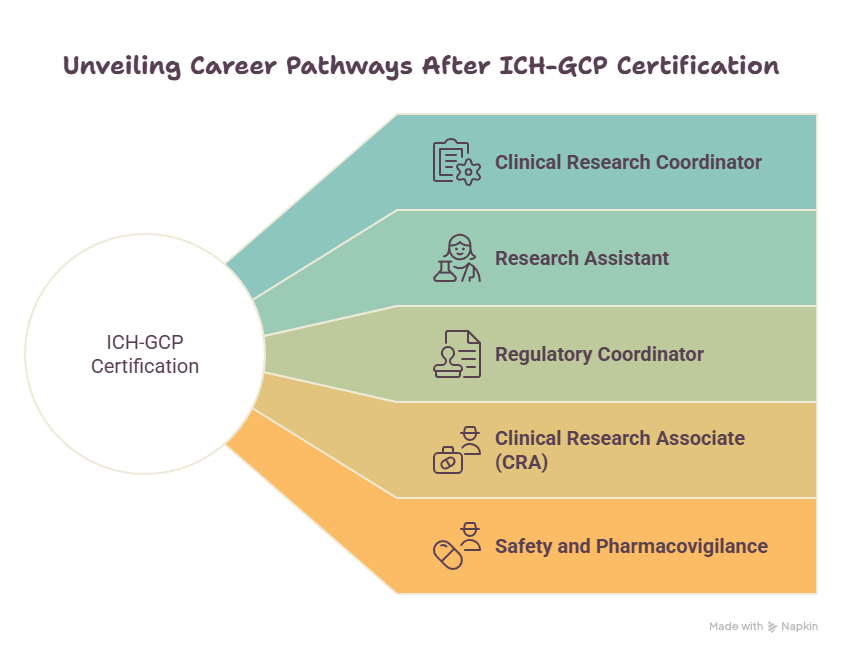
The fastest route after ICH-GCP certification is usually a role where GCP knowledge touches daily workflow. Clinical research coordinator jobs use consent, scheduling, eligibility review, source documentation, EDC query response, patient retention, and sponsor communication. Research assistant roles may support recruitment, data entry, chart review, specimen coordination, or visit preparation. Regulatory coordinator roles need document control, IRB submissions, training logs, and amendment implementation. Each pathway can start from Ohio clinical research certification, site operations training, startup checklists, and clinical trial templates.
CRA careers usually require a sharper monitoring mindset. You need to understand how monitors verify informed consent, confirm eligibility, review critical data, assess protocol compliance, track deviations, inspect drug accountability, and close action items. Candidates who want monitoring roles should study clinical trial data review, conducting investigator meetings, risk-based monitoring, and CRA certification pathways alongside ICH-GCP.
Safety and pharmacovigilance roles can also grow from a GCP base. These jobs reward people who can handle adverse event intake, seriousness criteria, medical review support, narrative clarity, follow-up questions, signal awareness, and inspection readiness. Ohio candidates targeting hospitals, sponsors, CROs, or remote safety teams should strengthen pharmacovigilance best practices, global regulatory compliance, PV audit preparation, and AE reporting compliance.
5. A 30-60-90 Day Plan for Getting ICH-GCP Certified and Job-Ready in Ohio
During the first 30 days, complete ICH-GCP certification and study the core documents that control trial behavior. Focus on informed consent, protocol compliance, delegation, source documentation, safety reporting, IRB communication, essential documents, and monitoring. Build a glossary that includes screening, randomization, eligibility, source data, EDC, query, CAPA, deviation, SAE, IP accountability, and closeout. Use GCP principles, investigator responsibilities, SAE reporting, and protocol deviation guidance.
During days 31-60, turn knowledge into portfolio proof. Create a mock informed consent version-control checklist, a subject visit tracker, a deviation log example, a query response example, a safety escalation flow, and a training log sample. Write resume bullets around prevention: “supported accurate visit documentation,” “tracked missing data,” “escalated safety information,” “maintained regulatory files,” and “improved patient follow-up.” Strengthen those bullets with patient retention strategies, budget awareness, trial timeline management, and project closeout procedures.
During days 61-90, apply with precision. Build separate resume versions for CRC, research assistant, regulatory coordinator, safety associate, data coordinator, and CRA bridge roles. For each posting, match your bullets to the risk behind the job description. If the role mentions consent, emphasize participant protection and version control. If it mentions EDC, emphasize source-to-database accuracy. If it mentions monitoring, emphasize issue tracking and action-item closure. Keep sharpening your edge through clinical research communities, career opportunity maps, salary comparisons, and certificate program comparisons.
6. FAQs About Getting ICH-GCP Certified in Ohio in 2026-27
-
Many Ohio research roles treat GCP knowledge as a baseline expectation because site teams handle participant consent, source documentation, safety reporting, protocol compliance, and sponsor oversight. Certification gives you language for those responsibilities before your first interview. Pair it with Ohio clinical research certification, GCP monitoring techniques, site visit workflows, and data integrity training.
-
The strongest starter roles are clinical research coordinator, research assistant, regulatory coordinator, data coordinator, patient recruitment specialist, and safety associate. CRC roles build the widest site experience; regulatory roles build document discipline; data roles build EDC accuracy; safety roles build adverse event judgment. Match your next step with CRC strategies, regulatory guidance, trial data review, and pharmacovigilance training.
-
You can become interview-ready in 30-90 days if you study beyond definitions. Complete GCP training, then build proof around consent, deviations, AE reporting, source documentation, and query handling. Hiring managers care about whether you can prevent expensive errors under pressure. Use GCP self-assessment, trial templates, deviation examples, and SAE procedures to practice scenario answers.
-
ICH-GCP certification is a strong start for CRA work, but monitoring roles require proof that you understand source review, SDV/SDR, consent verification, IP accountability, protocol compliance, issue escalation, follow-up letters, and site relationship management. A coordinator with real site exposure and strong monitoring vocabulary has a better bridge. Build with remote and on-site monitoring, risk-based monitoring, investigator meeting strategy, and CRA career guidance.
-
Use evidence-based bullets instead of a lonely credential line. Write bullets that show risk control: consent accuracy, source documentation, safety escalation, regulatory file maintenance, EDC query support, deviation tracking, and patient follow-up. A stronger resume connects certification to real trial behaviors. Strengthen your language with patient retention tactics, quality management strategies, startup activity checklists, and clinical research salary benchmarking.
-
The biggest mistake is applying with a certificate but no operational proof. Employers see many applicants who know terms yet cannot explain what they would do when consent is incomplete, a lab is missed, a subject reports hospitalization, or EDC data conflicts with source notes. Fix that by practicing scenarios through protocol deviation handling, AE reporting compliance, clinical trial amendments, and GCP compliance self-assessment.
