
Practice Test for the Clinical Research Associate Exam (Free & Detailed)
Practice tests only help when they expose how a CRA actually thinks under pressure. Most candidates do not fail because they never saw the content; they fail because they misread priorities, confuse GCP principles, miss documentation traps, and choose answers that sound active but are not compliant. This free CRA practice test is built to fix that.
The goal here is not to hand you memorized answers. It is to sharpen the judgment you need in monitoring, documentation review, protocol compliance, subject safety, and escalation. As you move through it, use related CCRPS resources like CRA roles, skills, and career path, GCP compliance essentials for CRAs, clinical trial auditing and inspection readiness for CRAs, and managing clinical trial documentation to close knowledge gaps fast.
1. How to Use This CRA Practice Test So It Actually Improves Your Score
A weak exam strategy turns even prepared candidates into second-guessers. The smartest way to use a practice test is to identify where your reasoning breaks: subject protection, protocol adherence, source-to-CRF thinking, investigational product control, or escalation judgment. If a question feels “tricky,” that usually means the exam is testing whether you understand the operational logic behind informed consent procedures, essential training requirements under GCP guidelines, handling clinical trial audits, or regulatory and ethical responsibilities for principal investigators.
As a CRA, you are being tested on more than definitions. You are being tested on sequence, risk recognition, and action selection. That is why candidates who only memorize phrases from primary vs secondary endpoints, blinding in clinical trials, randomization techniques, and placebo-controlled trials often underperform against scenario-based items.
Use this test in three passes. First, answer at normal pace without notes. Second, review every wrong answer and write why your first instinct failed. Third, revisit supporting content such as clinical research coordinator responsibilities and certification, clinical trial protocol management key CRC responsibilities, essential adverse event reporting techniques for CRCs, and drug safety reporting timelines and requirements because CRA exam questions often expose weaknesses in how site operations really work.
| CRA Exam Domain | What the Question Is Really Testing | Common Candidate Mistake | High-Scoring Thinking Pattern | Best CCRPS Reinforcement Topic |
|---|---|---|---|---|
| Informed consent | Timing, documentation, re-consent triggers | Focusing on signature only | Check process, version, date, and study procedure timing | Informed consent procedures |
| Eligibility review | Protocol inclusion/exclusion discipline | Assuming site interpretation is enough | Verify source evidence against exact protocol text | Clinical trial protocol management |
| Adverse events | Detection, documentation, escalation | Waiting for certainty before reporting | Document facts fast and escalate per timelines | Adverse event reporting techniques |
| SAE handling | Urgency and completeness | Treating SAE like routine AE | Prioritize patient safety and sponsor notification | Drug safety reporting |
| Source documentation | ALCOA-style thinking and traceability | Accepting undocumented verbal explanations | If it is not documented, it is not confirmed | Managing clinical trial documentation |
| CRF review | Accuracy and consistency | Reviewing for completeness only | Cross-check values, dates, and logic | Case report form best practices |
| Protocol deviations | Risk recognition and documentation | Calling everything minor | Assess subject safety, data impact, recurrence risk | GCP compliance strategies for CRCs |
| IP accountability | Chain of custody and reconciliation | Ignoring small count discrepancies | Reconcile immediately and document root cause | CRA roles and skills |
| Site training | Delegation and qualification | Assuming experience replaces study training | Confirm role-specific study training records | Essential training requirements under GCP |
| Monitoring reports | Documentation of oversight | Writing vague summaries | State issue, impact, action, owner, due date | Clinical trial auditing and inspection readiness |
| Query management | Data cleaning discipline | Accepting shortcuts to close queries | Resolve against source, not memory | Clinical data coordinator career guide |
| Enrollment oversight | Feasibility and quality balance | Pushing speed over compliance | Recruit only after process integrity is secured | Patient recruitment and retention trends |
| Blinding protection | Operational separation and bias control | Treating unblinding as administrative | Check necessity, process, and documentation | Blinding in clinical trials |
| Randomization errors | System/process compliance | Correcting informally | Document deviation and escalate appropriately | Randomization techniques explained clearly |
| Endpoint understanding | Why certain data matter more | Missing hierarchy of trial objectives | Know what data threaten study conclusions | Primary vs secondary endpoints |
| Safety committees | Independent oversight logic | Confusing sponsor review with DMC role | Understand safety monitoring governance | Data monitoring committee roles |
| Regulatory files | Essential document currency | Only checking presence, not currency | Verify completeness, signatures, dates, validity | Managing regulatory documents for CRCs |
| Audit readiness | Inspection mindset | Studying tasks in isolation | Always ask whether an auditor could reconstruct events | Handling clinical trial audits |
| Delegation logs | Who was authorized to do what and when | Ignoring backdated corrections | Match duties to dates, training, signatures | Research compliance and ethics mastery |
| Lab data review | Range evaluation and action follow-up | Treating abnormal values as data only | Check medical review, follow-up, AE linkage | Laboratory best practices for research assistants |
| Communication | Escalation and stakeholder clarity | Being polite but vague | State risk, evidence, and required action clearly | Effective stakeholder communication |
| Vendor coordination | Cross-functional oversight | Thinking vendors are outside site quality scope | Track dependencies and issue ownership | Vendor management in clinical trials |
| Resource pressure | Risk-based prioritization | Trying to fix low-risk items first | Protect safety, rights, and critical data first | Clinical trial resource allocation |
| Career-context questions | Role boundaries and progression | Confusing CRA with CRC or CTA duties | Study role distinctions and oversight logic | How to become a CRA |
| Exam strategy | Judgment under time pressure | Changing correct answers too often | Use elimination rooted in GCP logic | Proven test-taking strategies for clinical research exams |
2. The CRA Exam Blueprint: What Strong Candidates Recognize Faster Than Everyone Else
Strong candidates stop treating exam questions like trivia. They understand the hierarchy: protect subject rights and safety first, protect data integrity second, protect documentation traceability throughout, and escalate when site action is insufficient. That mindset appears again and again in how to become a clinical research associate, clinical research monitor career roadmap, senior CRA career path, and clinical research salary report because employers reward judgment, not vocabulary.
Another pattern: the exam often punishes candidates who choose the most aggressive action instead of the most appropriate one. A CRA is not there to replace the investigator, rewrite source records, or make undocumented fixes disappear. Questions often reward answers grounded in GCP-certified professional salary trends, state of clinical trials industry trends, clinical research technology adoption, and real-world evidence integration trends because modern trial quality is about controlled, documented, reviewable action.
If you keep missing questions, ask which error type is repeating. Are you underweighting source documentation? Are you forgetting that principal investigators retain ethical responsibilities? Are you weak in safety workflows from pharmacovigilance fundamentals and aggregate reports in pharmacovigilance? Fix the pattern, and your score moves faster than if you merely take more random quizzes.
3. Free CRA Practice Test: Questions 1-12 With Detailed Answer Logic
1. A subject signed the consent form on the same day as screening labs, but the lab collection time was documented two hours before consent. What is the CRA’s best immediate concern?
A. The lab normal ranges may be outdated
B. Study drug accountability may be affected
C. Study procedures may have occurred before valid informed consent
D. The subject should automatically be withdrawn
Correct answer: C.
This is the classic consent timing trap. The strongest answer focuses on subject rights and process validity, which is why informed consent procedures matters so much. Withdrawal is not automatic; first confirm facts, assess impact, and document appropriately. Questions like this also connect with handling audits under GCP and CRA documentation techniques.
2. During source review, the CRC states a blood pressure value was entered incorrectly into the eCRF but says there is “no time to fix it today.” What should the CRA do first?
A. Correct the eCRF personally
B. Document the discrepancy and ensure site follow-up
C. Delete the source value from review notes
D. Wait until database lock
Correct answer: B.
CRAs oversee and identify; they do not enter site data on behalf of the site unless the system and responsibilities explicitly allow it. The correct move reflects CRF best practices, GCP compliance essentials for CRAs, and clinical data manager career logic. Good candidates know oversight is not unauthorized correction.
3. Which finding most strongly suggests a protocol deviation with possible subject safety impact?
A. A visit window was missed by one day for a noncritical questionnaire
B. A subject received study drug before required lab review
C. A training binder tab was mislabeled
D. A monitor arrived late to the site visit
Correct answer: B.
This question tests prioritization. Safety-sensitive process failures outrank administrative imperfections. This is the same thinking behind patient safety oversight in clinical trials, adverse event handling essential PI guidelines, and protocol management responsibilities.
4. A site reports an SAE to the sponsor one day late because the coordinator was absent. Which response is best?
A. Ignore the issue because the event was eventually reported
B. Classify it only as a staffing issue
C. Document the late reporting, assess process failure, and follow corrective action
D. Remove the coordinator from the study immediately
Correct answer: C.
The exam usually rewards structured accountability, not emotional overreaction. This connects directly to drug safety reporting timelines, adverse event reporting techniques, pharmacovigilance manager career skills, and mastering regulatory submissions in pharmacovigilance.
5. The delegation log shows a staff member performing ECG assessments before their name appeared on the log. What is the most important issue?
A. ECG machines require recalibration
B. The person may not have been formally authorized at that time
C. The site needs more staff
D. The subject should be excluded from analysis
Correct answer: B.
Delegation logs are exam favorites because they test authorization, accountability, and timing. Review this through research compliance and ethics mastery, managing study documentation essential RA skills, and essential training requirements under GCP.
6. A subject meets all inclusion criteria except one borderline lab value. The investigator enrolled the subject anyway and documented “clinically acceptable.” What should the CRA do?
A. Accept the investigator judgment automatically
B. Confirm whether the protocol allowed investigator discretion
C. Delete the lab result from source review
D. Close the site immediately
Correct answer: B.
The trap is assuming medical authority overrides protocol text. It does not unless the protocol explicitly allows that flexibility. This is where protocol management, regulatory responsibilities for principal investigators, and clinical trial auditing and inspection readiness become crucial.
7. Which document is most useful for reconstructing whether a visit occurred per protocol?
A. Marketing brochure
B. Source notes and visit documentation
C. Office reception calendar only
D. Hiring policy manual
Correct answer: B.
The CRA exam loves reconstruction logic. Could an auditor recreate what happened, when, by whom, and under what instructions? That is the heart of documentation mastery for CRAs, regulatory documents management, and GCP preparation essentials.
8. A monitor notices repeated late data entry across three consecutive visits. What is the best interpretation?
A. It is harmless if data are eventually entered
B. It may indicate a systemic site performance issue
C. It proves fraud
D. It is only a sponsor database issue
Correct answer: B.
Repeated timing failures suggest process weakness, not isolated oversight. This connects with resource allocation in clinical trials, effective stakeholder communication, and vendor management essentials because recurring delay usually reflects workflow strain, not just individual forgetfulness.
9. In a blinded study, a site asks the CRA to confirm which treatment arm a subject received because the coordinator “just wants to check something.” The CRA should:
A. Reveal the assignment verbally
B. Refuse and follow the trial’s unblinding procedure if justified
C. Ask another coordinator instead
D. Send a screenshot of the randomization record
Correct answer: B.
Blinding is protected by process, not convenience. This is why blinding in clinical trials, randomization techniques, and placebo-controlled trial fundamentals are heavily testable.
10. What is the best reason a CRA reviews investigational product accountability records?
A. To replace the pharmacist
B. To ensure proper receipt, dispensing, return, and reconciliation
C. To set the subject visit schedule
D. To approve site budgets
Correct answer: B.
This is straightforward but not trivial. Accountability errors can signal deeper compliance failures. Role clarity from CRA roles and career path, operational thinking from clinical trial manager roadmap, and quality logic from clinical compliance officer career guide all support this.
11. If source documents are missing a correction date and initials on a changed entry, the main concern is:
A. The handwriting is unattractive
B. Audit trail and data credibility are weakened
C. The sponsor may reduce site payment
D. The PI must retire from research
Correct answer: B.
This question targets ALCOA-style principles without needing to name them. Study managing study documentation, clinical quality auditor pathway, and quality assurance specialist career roadmap to build sharper instincts.
12. A question asks for the CRA’s primary responsibility during routine monitoring. The best answer will usually emphasize:
A. Replacing the investigator’s medical judgment
B. Protecting rights, safety, well-being, and data integrity through oversight
C. Maximizing enrollment at any cost
D. Writing protocols for the sponsor
Correct answer: B.
When in doubt, go back to the role’s core purpose. This theme also appears in how to become a CRA, CRA salary data worldwide, top CROs hiring CRAs and CRCs, and remote CRA jobs and programs.
4. Free CRA Practice Test: Questions 13-24 With Detailed Answer Logic
13. A site filed an outdated protocol version in the binder while using the current version in practice. What is the biggest issue?
A. No issue exists
B. The regulatory file does not accurately reflect study conduct
C. The site must stop all enrollment forever
D. The CRA should discard the outdated version silently
Correct answer: B.
Regulatory binders must tell the true story of trial conduct. Review managing regulatory documents, clinical regulatory specialist pathway, and regulatory affairs specialist roadmap.
14. Which response best fits a risk-based monitoring mindset?
A. Spend equal time on every issue regardless of impact
B. Prioritize findings affecting safety, rights, and critical data
C. Ignore documentation issues if enrollment is strong
D. Review only sponsor emails
Correct answer: B.
Risk-based thinking is disciplined triage. It aligns with clinical trial success rates by therapeutic area, top remote monitoring tools, and technology adoption in trials.
15. A lab value is abnormal, clinically significant per investigator note, and no AE is recorded. What should the CRA do?
A. Assume no AE is needed
B. Raise the inconsistency and request site assessment/follow-up
C. Create the AE entry independently
D. Ignore it because labs are separate from safety reporting
Correct answer: B.
This is a classic linkage question. Strong candidates connect clinical significance, documentation consistency, and safety workflow through drug safety reporting, pharmacovigilance associate career roadmap, and drug safety specialist career guide.
16. Which answer best describes why monitoring visit reports matter?
A. They are optional sponsor paperwork
B. They document oversight, findings, follow-up, and site status
C. They replace source documents
D. They are primarily marketing records
Correct answer: B.
A monitoring report is your oversight footprint. It becomes vital during clinical trial audits and inspection readiness, handling audits under GCP, and clinical research project manager career path.
17. A coordinator says a missed assessment “does not matter because the subject stayed on study.” The CRA should think:
A. Correct, no documentation needed
B. The assessment may still affect protocol compliance and data completeness
C. Only the sponsor statistician should care
D. The subject must be immediately terminated
Correct answer: B.
Remaining on study does not erase missing data or a deviation. Concepts from primary vs secondary endpoints, biostatistics in clinical trials, and case report form best practices help here because not all data gaps are equal.
18. Which issue most directly threatens an inspector’s ability to reconstruct site conduct?
A. A coffee stain on the training log
B. Missing visit notes for a completed subject visit
C. A late lunch during the monitoring visit
D. A monitor using blue ink instead of black ink
Correct answer: B.
Reconstruction is everything. This is why candidates preparing seriously should work through managing study documentation, research assistant documentation skills, and clinical trial assistant career guide.
19. The PI signed off on eligibility after randomization occurred. What is the main problem?
A. Signature color is wrong
B. Eligibility confirmation may not have occurred before enrollment action
C. The subject’s age should be rechecked only
D. Randomization is always invalid in every case
Correct answer: B.
This is a sequence question. The exam repeatedly tests whether critical approvals happened at the correct time. Strengthen this with randomization techniques, principal investigator responsibilities, and clinical trial protocol management.
20. A candidate sees two answer choices that both sound plausible. The better choice will usually be the one that:
A. Involves the fastest shortcut
B. Best protects subjects and preserves documented compliance
C. Makes the monitor look most powerful
D. Removes paperwork from the site
Correct answer: B.
This is pure exam discipline. It is reinforced by proven test-taking strategies, overcoming exam anxiety, and creating the perfect study environment.
21. If an AE start date in the eCRF differs from the source note, the first step is to:
A. Guess the most likely date
B. Clarify against source and request correction/documentation as needed
C. Average the two dates
D. Remove the AE record
Correct answer: B.
The CRA exam punishes guessing. Source-based reconciliation is the standard. Study CRF definition and best practices, clinical data coordinator career path, and lead clinical data analyst career guide.
22. Which site issue is most likely to require immediate escalation?
A. A missing binder divider
B. A delayed filing of a noncritical newsletter
C. Repeated enrollment of subjects before complete eligibility verification
D. A typo in a contact list
Correct answer: C.
Immediate escalation is about repeated high-risk breakdown, not cosmetic disorder. This is supported by GCP compliance strategies for CRCs, how to become a lead CRC, and clinical trials coordinator career pathway.
23. Why do many candidates miss documentation questions they thought were easy?
A. They believe documentation can be repaired mentally later
B. They underestimate timing, attribution, and traceability details
C. They study too much safety content
D. They focus too much on salary reports
Correct answer: B.
The CRA exam is brutal on “close enough” thinking. It demands exactness. That is why passing the clinical research assistant certification exam, medical science liaison certification study methods, and top certification provider comparisons matter even for CRA candidates: disciplined study habits beat passive reading.
24. What is the best overall way to improve after taking this practice test?
A. Memorize only the answer letters
B. Review wrong answers by domain and map each one to a CCRPS topic for targeted repair
C. Immediately take ten more tests without review
D. Ignore easy questions and only study salaries and job boards
Correct answer: B.
This is how high performers separate themselves. They convert errors into a corrective study map using clinical research continuing education providers, clinical research journals and publications, clinical research conferences and events, and clinical research networking groups and forums so weak areas become deliberate training targets.
5. How to Review Your Answers and Raise Your CRA Exam Score Faster
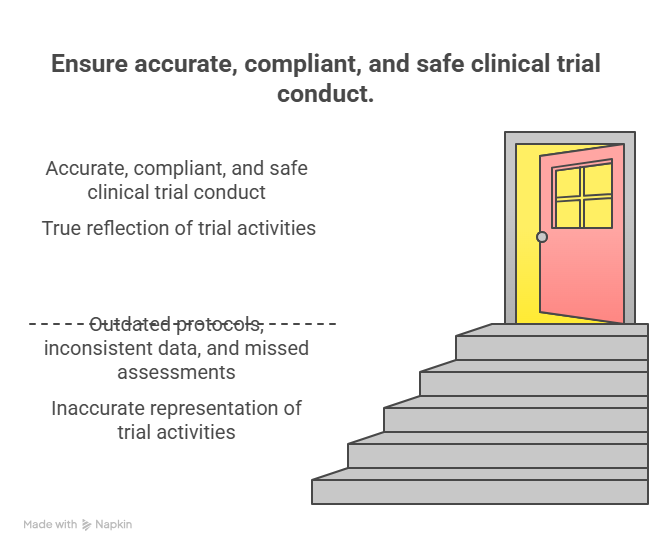
Most candidates review incorrectly. They look at the right answer, nod, and move on. That creates false confidence. Real review means classifying every miss into a failure type: role confusion, sequence confusion, documentation weakness, safety underreaction, escalation hesitation, or protocol interpretation failure. Then connect each category to a reinforcing CCRPS resource such as GCP compliance for CRAs, CRA auditing and inspection readiness, documentation techniques for CRAs, and CRA career roadmap.
Another mistake is overstudying what feels comfortable. Candidates love reading broad career content like clinical research associate salaries worldwide, top highest-paying clinical research jobs, and top CRO market share analysis because those articles are motivating. But score improvement usually comes from drilling unglamorous operational pain points: consent timing, AE consistency, missing signatures, delegation dates, version control, and visit-window decisions.
Build a repair grid. If you miss safety questions, review pharmacovigilance specialist salaries and career growth only for role context, then go straight to drug safety reporting and aggregate reports in pharmacovigilance. If you miss protocol questions, study blinding, randomization, placebo-controlled trials, and endpoint selection. If you miss role-boundary questions, compare CRA, CRC, clinical trial manager, and principal investigator responsibilities side by side.
6. FAQs About the Clinical Research Associate Exam Practice Test
-
A single score means less than your error pattern. If you score well but still miss consent timing, eligibility sequence, and safety escalation items, you are not as ready as the number suggests. Use proven test-taking strategies, exam anxiety strategies, study environment setup, and CRA certification provider comparisons to judge preparedness more accurately.
-
They are useful only if they are detailed and reviewed properly. Free questions without explanation often create shallow familiarity. Pair practice with GCP essentials for CRAs, documentation mastery, audit readiness, and clinical research continuing education providers so your understanding becomes operational, not superficial.
-
Expect informed consent, source documentation, protocol compliance, adverse events, delegation, investigational product accountability, monitoring reports, and escalation logic. These topics overlap heavily with informed consent procedures, drug safety reporting, clinical trial protocol management, and clinical trial auditing and inspection readiness.
-
Do enough to expose repetition in your errors, not just enough to feel busy. For many candidates, 75 to 150 quality questions with deep review beats 500 rushed questions. Use related CCRPS content like how to become a CRA, clinical research networking groups, best LinkedIn groups for clinical research professionals, and top job portals for clinical research careers to stay motivated while keeping the study plan practical.
-
Stop memorizing nouns and start training decision order. Ask, in sequence: Are subject rights or safety at risk? Is there a protocol violation? Is source support adequate? Does this require escalation? That logic becomes stronger when you review CRA role fundamentals, CRC operational responsibilities, principal investigator responsibilities, and clinical compliance officer skills.
-
Absolutely. The best CRA exam prep sharpens the exact thinking employers want: clean escalation, disciplined documentation review, protocol-first judgment, and calm handling of site issues. That is why exam prep naturally supports career growth through resources like senior CRA career path, clinical research staffing agencies, top CROs hiring clinical research talent, and remote CRA opportunities.
