
The Ultimate Guide to Getting Your Good Clinical Practice (ICH-GCP) Certification in West Virginia: Everything You Need to Know in 2026–27
Good Clinical Practice training can open doors across West Virginia’s academic medical centers, hospitals, research programs, trial sites, contract research organizations, and sponsor-facing teams. Its value depends on whether the curriculum matches the study, institution, funding source, and responsibilities attached to your target role.
This guide explains how to choose credible ICH-GCP training, prepare for E6(R3), document completion, manage renewal, and convert the credential into job-ready competence. It also connects GCP knowledge with West Virginia clinical research certification, clinical research career opportunities, free clinical research training, and professional research associations.
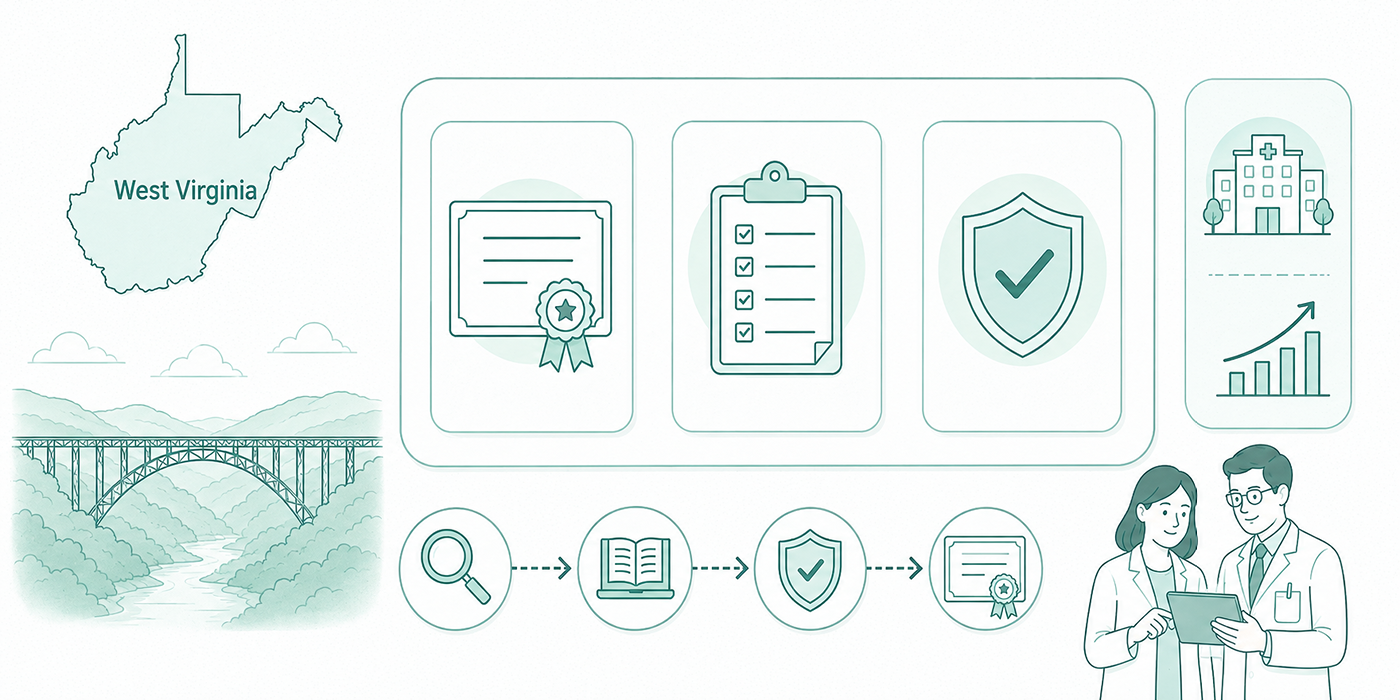
1. What ICH-GCP Certification Means in West Virginia in 2026–27
West Virginia uses institutional, employer, sponsor, protocol, FDA, and funding requirements to determine who needs GCP training and which course will be accepted. A training certificate records successful completion of a course. Your authorization to perform trial duties still depends on your qualifications, delegation, institutional onboarding, protocol training, supervision, and assigned responsibilities.
This distinction can save candidates from a costly mistake. Completing a brief online module does not automatically prepare someone to conduct informed consent, assess adverse events, dispense investigational products, resolve data discrepancies, or monitor a research site. Those activities require applied knowledge of investigator responsibilities under GCP, ethical conduct and patient safety, serious adverse event reporting, protocol deviation management, and clinical-trial data integrity.
ICH E6(R3) should sit at the center of 2026–27 course selection. FDA issued its final E6(R3) guidance in September 2025, describing flexible, risk-based approaches and accommodating innovation in trial design, conduct, and technology. NIH confirmed in April 2026 that GCP training consistent with E6(R3) meets its training requirement.
The practical shift involves designing quality into a trial before preventable failures occur. Teams must identify factors that are critical to participant protection and reliable results, select proportionate controls, manage computerized systems appropriately, and focus oversight on meaningful risks. Professionals should connect E6(R3) with risk-based monitoring strategies, quality management for research projects, remote and on-site monitoring, clinical-trial data review, and global regulatory guidance.
Local requirements also vary between research environments. Marshall University’s published human-subject research guidance states that ICH-GCP requirements are not automatically applied to every human-subject study and that investigators must request their application to an individual study when appropriate. This makes study-level confirmation essential rather than optional.
West Virginia University’s investigator guidance recognizes that award-specific requirements can include GCP training for personnel involved in NIH-funded clinical trials. WVU also operates clinical research infrastructure that supports regulatory guidance, study coordination, investigator and study-personnel training, monitoring, auditing, budgeting, and ClinicalTrials.gov activities.
NIH expects investigators and clinical-trial personnel involved in the conduct, oversight, or management of NIH-funded trials to receive GCP training. NIH policy allows training through a course, class, academic program, or recognized clinical research organization and expects refresher training at least every three years.
| West Virginia ICH-GCP Certification Decision Matrix for 2026–27 | ||||
|---|---|---|---|---|
| Decision Point | What to Verify | Why It Protects You | Evidence to Keep | High-Risk Mistake |
| 1. Receiving organization | Who will review the certificate | Acceptance rules differ between institutions | Written training instructions | Buying a course before checking acceptance |
| 2. Guideline version | Explicit ICH E6(R3) coverage | Aligns learning with modern GCP principles | Curriculum outline | Completing an E6(R2)-only course unknowingly |
| 3. FDA relevance | Drug, biologic, or device content | Connects international principles with U.S. practice | Module list and assessment result | Assuming general ethics training covers FDA trials |
| 4. NIH compatibility | Training suitable for NIH-funded trials | Supports funding-related qualification | Provider description and certificate | Ignoring award-specific training conditions |
| 5. Institutional assignment | WVU, Marshall, hospital, or site requirements | Prevents onboarding delays | Training portal assignment or approval | Relying on another employer’s acceptance |
| 6. Study classification | Clinical trial, observational research, or other study | Determines applicable training | Protocol and IRB determination | Applying one training rule to every project |
| 7. Learner track | Investigator, coordinator, CRA, or sponsor focus | Makes content relevant to assigned duties | Track title | Choosing solely by course length |
| 8. Informed consent | Consent discussion, documentation, and reconsent | Protects participant autonomy | Scenario score or competency record | Treating consent as a signature collection task |
| 9. Investigator oversight | Investigator GCP responsibilities | Clarifies accountability after delegation | Investigator module completion | Assuming delegation transfers responsibility |
| 10. Sponsor duties | Sponsor responsibilities | Supports oversight of sites and vendors | Sponsor-focused module | Treating outsourcing as removal of accountability |
| 11. IRB interaction | Approval, amendments, reporting, and continuing oversight | Prevents unauthorized implementation | IRB training record | Confusing sponsor approval with IRB approval |
| 12. Protocol compliance | Protocol deviation handling | Improves consistent trial conduct | Deviation exercise | Correcting errors without an audit trail |
| 13. Safety recognition | SAE definitions and reporting | Supports rapid escalation | Safety assessment score | Waiting for causality confirmation before escalating |
| 14. Data integrity | Attributable, traceable, and contemporaneous records | Protects reliable decision-making | Data-integrity module | Backdating or replacing original entries |
| 15. Source documentation | Original records and certified copies | Allows reconstruction and verification | Source-document exercise | Creating source information after data entry |
| 16. Computerized systems | Access, validation, security, and audit trails | Addresses technology-enabled trial risk | System and SOP training records | Sharing accounts or exporting uncontrolled data |
| 17. Quality by design | Critical-to-quality factors identified early | Reduces avoidable operational failure | Quality-risk exercise | Adding controls only after recurring errors |
| 18. Proportionate risk | Risk-based monitoring | Directs resources toward consequential risks | Risk-assessment example | Treating every discrepancy as equally critical |
| 19. Monitoring practice | Remote and on-site monitoring | Connects GCP with operational oversight | Monitoring training record | Reducing monitoring to document collection |
| 20. Essential records | Creation, filing, access, correction, and retention | Supports inspection readiness | Records-management module | Filing without completeness review |
| 21. Investigational product | Receipt, storage, dispensing, and reconciliation | Protects product accountability | Product-management training | Leaving temperature excursions unresolved |
| 22. Participant privacy | Authorized access and secure disclosure | Reduces confidentiality breaches | Privacy training record | Assuming GCP replaces privacy training |
| 23. Vulnerable populations | Additional safeguards and consent considerations | Improves ethical enrollment decisions | Population-specific training | Using an identical process for every participant |
| 24. Assessment quality | Scenario-based exam and passing standard | Provides evidence beyond attendance | Score report | Selecting instant certificates without testing |
| 25. Certificate details | Name, provider, course, track, and completion date | Enables qualification verification | Original PDF and verification record | Saving only a cropped screenshot |
| 26. Renewal requirement | Institutional, sponsor, and NIH deadlines | Prevents training gaps during active trials | Training log and reminders | Relying only on a printed expiration date |
| 27. Inspection readiness | GCP compliance self-assessment | Surfaces weaknesses before external review | Completed gap assessment | Waiting for an audit notice to prepare |
| 28. Career application | Clinical research program comparison | Places GCP within a wider development plan | Competency portfolio | Using one certificate as a complete career strategy |
2. How to Choose an Accepted ICH-GCP Course in West Virginia
Begin with the organization that will receive your certificate. Ask the research office, hiring manager, principal investigator, training administrator, sponsor representative, or site manager which provider and learner track they accept. Request confirmation of the required guideline version, renewal interval, supplemental modules, and documentation format.
This step has greater value than comparing course advertisements. A certificate accepted for one NIH-funded academic study may fail to satisfy a pharmaceutical sponsor’s onboarding package. A hospital employee may also require institutional human-subject protections, privacy, conflict-of-interest, responsible-conduct, biosafety, or protocol-specific training. Use the clinical research ethics and compliance directory, global regulatory guidelines directory, GCP compliance assessment, and clinical-trial start-up checklist to identify adjacent requirements.
Examine whether the curriculum teaches E6(R3) as an operating framework. Strong training explains quality by design, proportionality, participant-centered trial conduct, reliable results, service-provider oversight, computerized systems, record traceability, risk communication, and fit-for-purpose processes. FDA describes E6(R3) as a modernization that supports risk-based methods and innovation in trial design and technology.
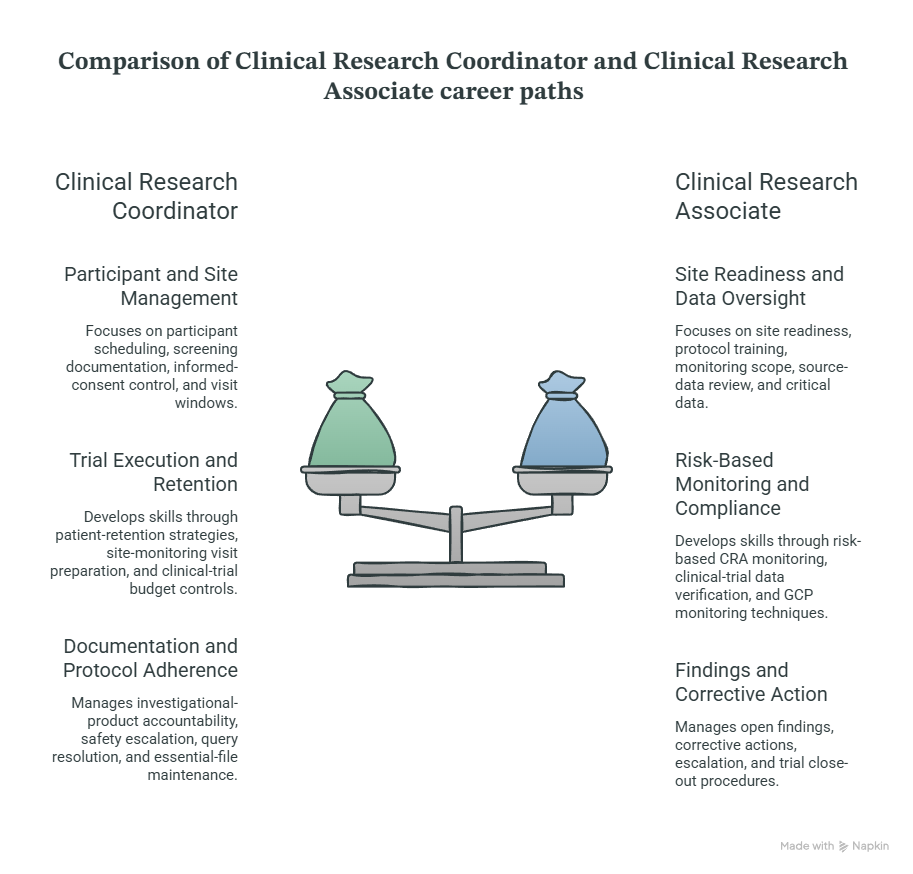
The right learner track also depends on your role. A clinical research coordinator needs applied knowledge of screening, consent, visit windows, source documentation, investigational-product accountability, safety escalation, query response, monitor communication, and essential records. Reinforce the course with patient-retention strategies for CRCs, site-monitoring visit preparation, CRC budget-management strategies, protocol deviation handling, and research-team communication.
A CRA-oriented course should reach further into site qualification, initiation, interim monitoring, close-out, source-data review, risk signals, issue escalation, action-item tracking, and corrective-action verification. Pair GCP training with CRA risk-based monitoring, clinical-trial data verification, investigator-meeting strategies, remote and on-site monitoring mastery, and CRA exam time-management techniques.
Investigators should prioritize oversight, delegation, resources, medical decisions, safety review, protocol compliance, investigational-product control, and supervision of delegated tasks. Useful supporting areas include PI site-operations oversight, investigator-initiated trials, budget management for principal investigators, investigator GCP responsibilities, and clinical-trial data-integrity duties.
Free training can satisfy a requirement when the receiving institution accepts the provider and the course generates verifiable documentation. Paid training earns its value through deeper assessment, updated content, practical scenarios, expert support, role specialization, and structured development. Use the directory of free clinical research training, clinical research certificate comparison, clinical research master’s rankings, and clinical research salary tool before making a larger investment.
3. Step-by-Step Process for Earning and Documenting Your Certificate
Define your target role before opening a course catalog. Review several West Virginia job descriptions for research assistant, clinical research coordinator, research nurse, CRA, regulatory specialist, project manager, data coordinator, or investigator positions. Record repeated requirements and separate them into training, experience, systems knowledge, documentation skills, and clinical responsibilities.
Next, identify the controlling requirement. A candidate joining an NIH-funded trial should verify NIH and institutional expectations. A professional joining an industry-sponsored study should obtain the sponsor’s training matrix. Marshall investigators should confirm whether ICH-GCP is being applied to the individual protocol, while WVU personnel should follow their assigned institutional and award-specific training processes.
Select the course only after confirming the provider, learner group, E6(R3) coverage, assessment standard, certificate format, and refresher route. Verify that it teaches adverse-event reporting compliance, sponsor roles and responsibilities, ethical patient protection, protocol amendment management, and quality management strategies.
During training, build an application notebook. For every major principle, record the risk being controlled, responsible role, immediate action, escalation route, required document, and preventive control. This transforms passive content into a repeatable decision framework.
For example, an informed-consent problem should trigger questions about the approved version, participant capacity, signature and date sequence, person obtaining consent, required witnesses, interpreter involvement, study procedures already completed, reconsent need, IRB reporting, and corrective action. A safety scenario should trigger evaluation of seriousness, severity, expectedness, relatedness, awareness date, medical follow-up, sponsor notification, IRB obligations, and documentation.
Use practical resources to deepen each module. The SAE reporting guide, protocol deviation corrective-action guide, clinical-trial safety-monitoring guide, clinical-trial templates directory, and GCP monitoring techniques support scenario-based learning.
After passing the assessment, inspect the certificate before uploading it. Confirm your legal name, provider, course title, track, completion date, guideline version where shown, certificate number, verification method, and expiration information. Save the original PDF in a secure professional folder, retain the completion email, and keep a backup separate from your employer’s learning system.
Create a personal training log containing the course name, provider, completion date, accepted purpose, guideline version, supporting modules, expected refresher date, verification link, and file location. Schedule reminders 120, 90, and 30 days before the earliest possible renewal date. NIH expects refresher training at least every three years, although employers, sponsors, protocols, and institutions may establish shorter cycles.
Finally, add the credential to your résumé with precision. Include the full course title, provider, and completion year. Support it with evidence of trial start-up knowledge, monitoring-visit preparation, trial timeline management, data-review competence, and research project quality management.
What is blocking your West Virginia clinical research career right now?
Choose one answer to reveal the most useful next move.
4. How to Turn GCP Certification Into Job-Ready Evidence
Employers gain limited information from a certificate listed without context. Strengthen its value by showing that you can apply GCP principles to the responsibilities of the position.
A coordinator candidate should understand participant scheduling, screening documentation, informed-consent control, source records, visit windows, investigational-product accountability, safety escalation, query resolution, monitor follow-up, and essential-file maintenance. Develop these areas through effective patient-retention strategies, site-monitoring visit preparation, CRC protocol deviation management, clinical-trial budget controls, and trial start-up planning.
A CRA candidate should speak confidently about site readiness, protocol training, monitoring scope, source-data review, critical data, risk indicators, open findings, corrective actions, escalation, and close-out. Relevant preparation includes risk-based CRA monitoring, remote and on-site monitoring, clinical-trial data verification, investigator-meeting management, and GCP monitoring techniques.
West Virginia candidates can target organizations connected to academic and health-system research rather than applying without direction. WVU’s clinical research resources support study coordination, regulatory activities, contracts, budgeting, monitoring, auditing, and investigator training. Marshall’s Clinical Research Center describes support for trial discovery, contracting, regulatory work, site qualification, initiation, participant visits, monitoring, data entry, documentation, and close-out.
Use those operational categories to improve your résumé. Replace vague claims such as “knowledge of clinical research” with truthful, specific competence in consent-version control, deviation classification, source-document review, safety escalation logic, essential-document organization, or quality-risk assessment.
Create a small portfolio using simulated or publicly available materials. Include a mock training log, consent-version review, deviation record, safety-escalation map, source-to-CRF reconciliation exercise, and site-file checklist. The clinical-trial templates directory, patient-education resources, research ethics directory, GCP self-assessment tool, and free research training directory provide useful practice material.
Prepare interview examples that demonstrate controlled work, accurate documentation, confidentiality, risk escalation, process improvement, or error correction. Experience from nursing, pharmacy, laboratories, healthcare administration, data management, quality assurance, or academic research can support these stories when presented honestly.
Networking should focus on operational insight. Ask clinical researchers which systems new hires use, which documentation errors consume the most time, which competencies distinguish strong coordinators, and which training delays onboarding. Explore online clinical research communities, clinical research professional associations, clinical research career opportunities, and clinical research salary benchmarks to target conversations intelligently.
5. Renewal, E6(R3) Readiness, and Expensive Mistakes to Avoid
Manage GCP renewal like an essential study control. Keep completion records, accepted-course documentation, institutional assignments, provider correspondence, and prior certificates. Historical certificates may be needed to demonstrate continuous qualification during sponsor review, audit preparation, or reconstruction of study staffing.
NIH expects GCP refresher training at least once every three years. An institution, employer, sponsor, network, protocol, or standard operating procedure may require earlier completion. The earliest applicable requirement should control your personal renewal calendar.
Review content before repeating a familiar course. A useful 2026–27 refresher should strengthen E6(R3) knowledge of critical-to-quality factors, proportionality, participant protection, reliable results, computerized systems, service-provider oversight, risk communication, remote processes, and fit-for-purpose records. Connect the refresher with quality-management strategies, risk-based monitoring, clinical-trial safety monitoring, data-integrity responsibilities, and remote monitoring mastery.
One expensive mistake is paying for a course before confirming acceptance. Another is describing yourself as “ICH-GCP certified” without identifying the provider, course, and date. Additional risks include allowing training to lapse, confusing GCP with general human-subject protection training, sharing confidential examples during interviews, and claiming operational competence gained solely through online modules.
A subtler failure involves focusing heavily on minor administrative imperfections while missing risks that could harm participants or weaken critical data. E6(R3) promotes proportionate, quality-focused approaches. Improve this judgment through protocol deviation corrective actions, SAE reporting procedures, clinical-trial data review, ethical patient-safety principles, and investigator oversight requirements.
Avoid collecting disconnected certificates without building deeper capability. A stronger sequence combines current GCP training, institutional human-subject requirements, role-specific education, simulated practice, supervised exposure, and advanced certification after meeting eligibility standards. Compare CCRPS, ACRP, and SOCRA programs, explore clinical research master’s programs, use free training resources, review professional research associations, and assess clinical research salary pathways.
6. Frequently Asked Questions About ICH-GCP Certification in West Virginia
-
Requirements depend on the institution, employer, study type, sponsor, protocol, funding source, and assigned responsibilities. Marshall University states that it does not automatically apply ICH-GCP requirements to every human-subject study, while NIH expects covered investigators and personnel involved in NIH-funded clinical-trial conduct, management, or oversight to receive GCP training.
Review the position description and obtain confirmation from the receiving organization. The West Virginia clinical research certification guide, global regulatory directory, GCP compliance self-assessment, and clinical research ethics directory can help identify surrounding requirements.
-
GCP qualification is generally documented through an accepted training provider rather than a West Virginia state-issued professional license. The organization responsible for the research decides which course, track, documentation, and refresher schedule it accepts.
Verify local requirements before enrolling. Study the credential alongside sponsor responsibilities, investigator GCP duties, ethical participant protection, and global clinical research guidelines.
-
Completion time varies according to the provider, learner track, curriculum depth, number of modules, assessment method, and the learner’s prior experience. Course duration provides little information about employer acceptance or practical quality.
Evaluate whether the course develops competence in adverse-event reporting, protocol deviation management, clinical-trial safety monitoring, GCP monitoring methods, and clinical-trial data integrity.
-
Acceptance depends on the receiving institution and its renewal rules. E6(R3) training has become increasingly valuable because FDA’s final guidance was issued in September 2025 and NIH confirmed that E6(R3)-consistent training meets its GCP requirement in April 2026.
Send your existing certificate, completion date, and curriculum to the training administrator. Prioritize updated learning when the earlier course lacks quality-management principles, risk-based monitoring, technology-enabled monitoring, or modern data-review practices.
-
NIH expects GCP training to be refreshed at least every three years. Your employer, institution, sponsor, protocol, research network, or standard operating procedure may require a shorter interval.
Use a personal training tracker and begin checking requirements months before the due date. Connect renewal management with clinical-trial timelines, trial start-up activities, project close-out procedures, and inspection-readiness assessment.
-
GCP training can strengthen applications for research-assistant, site-support, data-support, and junior coordinator roles. Employers may also assess documentation skills, healthcare exposure, communication, systems knowledge, attention to detail, confidentiality, and the ability to recognize and escalate risk.
Build applied evidence through research-assistant communication strategies, clinical-trial template practice, free research training, online clinical research communities, and clinical research career mapping.
