
Top 25 Clinical Research Master's Programs Globally (2026 Rankings)
Clinical research master’s programs look similar on brochures and wildly different in real career outcomes. Some programs build real trial operators who can handle protocol design, ethics, biostatistics, monitoring, and study execution. Others look polished but stay too theoretical, too narrow, or too disconnected from industry hiring reality. That gap matters because a weak master’s degree does not just waste tuition. It can delay your move into higher-value roles in clinical research coordination, clinical research associate work, pharmacovigilance, clinical trial project management, and regulatory affairs.
This 2026 ranking is built for serious candidates who want a global shortlist that values curriculum strength, trial-methods depth, mentorship, practical research structure, flexibility, and career relevance over empty prestige signals. The goal is not to flatter famous universities. It is to help you find programs that actually sharpen your position in a field ruled by execution quality, compliance discipline, and evidence-based judgment. Official program pages were used to compare format, structure, duration, and training emphasis across the ranked institutions.
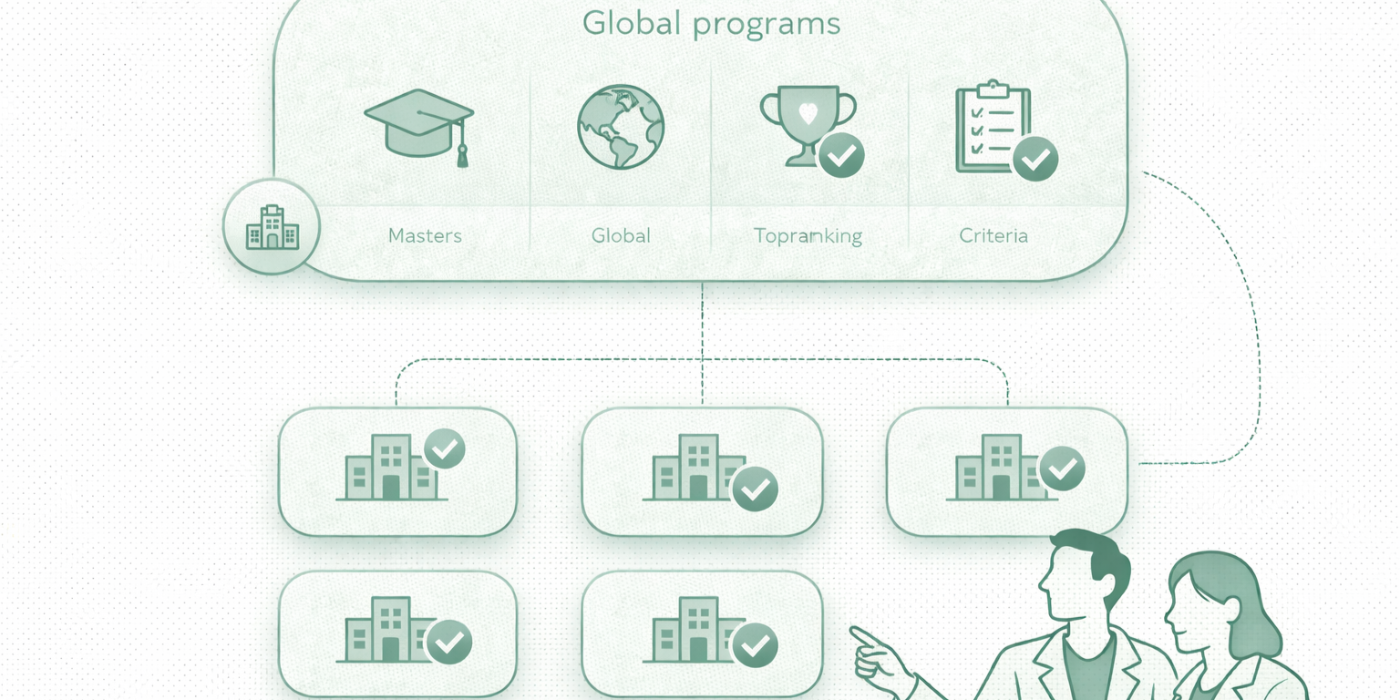
1. How We Ranked the Best Clinical Research Master’s Programs in the World
A useful ranking for clinical research education has to judge programs the way employers and real studies do. That means asking whether a program trains students to think through biostatistics in clinical trials, case report form design, randomization techniques, blinding strategy, and primary versus secondary endpoints. A program that cannot build those muscles may still look academic, but it will not prepare graduates for the pressure points that shape actual trial quality.
We weighted six things heavily. First, trial-methods depth. Second, applied research structure such as practicum, mentored project, dissertation, or capstone. Third, relevance to real delivery environments including sites, sponsors, CROs, and academic centers. Fourth, flexibility for working professionals, because many of the best candidates are already operating in research roles. Fifth, breadth across regulation, ethics, statistics, and operations. Sixth, career signal strength for pathways like CRA advancement, CRC growth, medical monitor work, clinical data management, and QA leadership. Official program pages showed meaningful differences in format, audience, and practical emphasis, which is exactly why a global ranking is useful in the first place.
Right before you compare tuition or brand recognition, you should be asking a harsher question: will this program make me more dangerous in interviews, stronger in study operations, and faster at solving the failures that sink trials? Strong programs raise your value in GCP compliance, informed consent execution, protocol deviation management, audit readiness, and sponsor-side oversight. Weak ones mostly raise your vocabulary.
2. What Separates the Top Programs From the Rest
The first separator is trial specificity. Plenty of graduate programs talk about research in broad, flattering language. Far fewer train students directly in the moving parts that determine whether a study survives scrutiny. The best programs on this list are not vague about methods. They push students toward stronger command of clinical trial protocol management, adverse event reporting, drug safety timelines, regulatory submissions, and clinical trial auditing. That matters because employers can tell when a candidate understands the operational cost of a mistake.
The second separator is mentored execution. Strong programs force students to do more than memorize methodology. They require practicum work, research projects, capstones, dissertations, or mentored investigations that create real analytical pressure. That kind of structure better mirrors the professional demands of managing regulatory documents, handling site management, resource allocation in trials, vendor management, and stakeholder communication. If a program never forces you to defend decisions, it may not strengthen the judgment that senior roles demand.
The third separator is format realism. Clinical research attracts many professionals who cannot disappear into a full-time campus bubble for two years. Programs that offer credible part-time, distance, hybrid, or professional-friendly structures without gutting rigor are more valuable than many applicants realize. That flexibility affects access to upskilling for people already working toward clinical trial manager roles, clinical operations manager growth, pharmacovigilance manager pathways, and clinical compliance careers. Official pages show major variation here, especially across Oxford, UCL, Sheffield, Lancaster, Warwick, Melbourne, Ohio State, Rutgers, and UNT Health.
The fourth separator is where the program points you after graduation. Some are clearly optimized for clinician-investigator development. Some are stronger for trial-delivery professionals. Some are better for research management and operations. If you ignore that distinction, you can overpay for a degree that sharpens the wrong edge. A future CRA or CRC may need different training emphasis than someone targeting medical science liaison work, clinical data leadership, quality auditing, or principal investigator development. That is why rankings without role-fit analysis are often expensive noise.
3. Which Type of Program Fits Which Type of Candidate
If you want the strongest trial-methods identity, the most compelling cluster is Oxford, UCL, Edinburgh, Glasgow, Birmingham, and Sheffield. These programs are especially attractive for learners who want to think deeply about trial design, conduct, analysis, and reporting rather than simply add a research credential to a résumé. They pair well with long-term growth in trial monitoring, site qualification, GCP mastery, placebo-controlled trial judgment, and data monitoring committee literacy.
If you are a clinician or academically anchored researcher aiming for investigator-level growth, programs like Harvard, Duke, UCSF, BU, Mount Sinai, UNC, Northwestern, Pitt, and MUSC are often stronger bets. These programs tend to signal deeper commitment to formal research development, mentored investigation, or structured scholar training. They are better fits for candidates who want to publish, compete for grants, lead protocols, or build long-term authority in clinical and translational work. That aligns naturally with growth in principal investigator responsibilities, patient safety oversight, clinical trial protocol development, medical oversight, and scientific communication.
If you are already in operations and want stronger advancement leverage, the more practical cluster includes Ohio State, Rutgers, UNT Health, WashU, Melbourne, Monash, SIT, and NUS. These programs become more attractive when your real goal is to move upward in management, delivery, implementation, or industry-facing roles rather than purely academic research. That is a smart path for professionals targeting clinical trial management, project planning, budget oversight, clinical trial supply-chain awareness, and remote monitoring ecosystems.
4. The Most Expensive Mistakes People Make When Comparing Programs
The first mistake is letting brand name overrule curriculum design. In clinical research, weak practical training creates expensive downstream pain. A candidate can graduate from a famous institution and still struggle to think clearly about serious adverse events, aggregate safety reporting, clinical trial amendments, documentation control, and research compliance ethics. In this field, operational weakness gets exposed quickly.
The second mistake is ignoring role match. Too many candidates say they want “clinical research” when they actually mean one of four different futures: trial delivery, investigator development, safety/regulatory growth, or operations leadership. Those paths do overlap, but not enough to make program choice casual. Someone leaning toward pharmacovigilance associate work, drug safety specialist growth, regulatory affairs associate roles, or clinical quality auditing should not compare programs the same way a future clinician-investigator would.
The third mistake is underestimating delivery format. A great curriculum in the wrong format can become a bad personal decision. If you are already juggling site work, sponsor pressure, rotating shifts, or family obligations, the program’s real usability matters. That is why continuing education providers, certification provider comparisons, networking groups, LinkedIn groups, and job portals should sit beside program research. Degree choice is not just academic. It is a career systems decision.

5. How To Choose the Right Program for Your Career, Not Someone Else’s
Start by defining the job you want the degree to unlock within two to four years. That one move cuts through a huge amount of confusion. If your target is a stronger shot at CRA positions, CRC roles, project manager growth, data coordinator progression, or regulatory specialist advancement, your screening criteria should follow that target brutally. Degree shopping without role clarity leads to expensive drift.
Then test the program against five real filters. Does it train useful methods? Does it force applied work? Does it fit your life? Does it connect to the environments where you want to work? Does it sharpen a skill stack employers pay for? That skill stack often includes GCP training, informed consent mastery, study documentation control, data collection discipline, and medical writing or reporting judgment. If the program strengthens those muscles, it is probably building value.
Finally, check whether the degree meaningfully improves your positioning relative to cheaper alternatives. Sometimes the right move is a master’s degree. Sometimes it is a sharper combination of experience, targeted certificates, networking, exam preparation, and focused portfolio evidence. CCRPS readers should compare master’s options against career roadmaps, remote opportunity directories, conference ecosystems, staffing agencies, and freelance platforms. The right degree should widen your options, not merely decorate your profile.
6. FAQs
-
Yes, but only when the program closes a real capability gap. If you already work in studies, the degree should deepen the parts of your profile that employers trust for promotion: methods, leadership judgment, regulatory fluency, analytics, protocol reasoning, and research execution. If it only repeats surface-level concepts you already use, it may not justify the cost. Compare the program against where you want to grow in CRA oversight, CRC execution, project management, and quality systems.
-
A clinical research master’s is usually broader. It may include epidemiology, translational methods, research design, ethics, and investigator development. A clinical trials master’s is usually narrower and more directly focused on trial design, conduct, analysis, reporting, and delivery. Neither is automatically better. The right choice depends on whether you want a wider research platform or deeper specialization in trial operations. That decision should connect to your interests in trial design, blinding, endpoint strategy, and sponsor-side execution.
-
Programs that offer credible part-time, distance, hybrid, or flexible structures deserve special attention if you are already employed. On this ranking, Oxford, UCL, Sheffield, Lancaster, Warwick, Ohio State, Rutgers, and UNT Health stand out more than campus-heavy models when schedule realism is a major factor. The right format matters because many professionals are simultaneously trying to keep up with GCP responsibilities, regulatory documentation, patient recruitment pressure, and audit-readiness standards.
-
In clinical research, actual training usually wins over reputation faster than applicants expect. Brand can help open a conversation, but employers quickly move to whether you can think through protocol risk, site workflow, data quality, compliance, safety, and operational tradeoffs. A candidate who can speak intelligently about protocol deviations, AE handling, monitoring, and study documentation will often outperform a candidate with shinier branding but weaker execution language.
-
Choose the program that matches the bottleneck between your current profile and your target role. If you want investigator-level growth, publications, and deeper methodological authority, a research-heavy program makes more sense. If you want faster movement into leadership, operations, vendor oversight, study management, or delivery roles, a management-oriented model may produce better ROI. This is especially true if you are targeting roles tied to resource allocation, budget oversight, vendor management, and clinical operations advancement.
-
Ask what proportion of the curriculum is dedicated to actual clinical trial methods, whether there is a mentored project or practicum, how many students are working professionals, what delivery format is truly realistic, what kinds of research outputs students produce, and what role types graduates usually pursue. Those answers tell you far more than generic marketing copy. They also help you compare the program against the competencies behind clinical research certification, continuing education options, networking strategies, and career-entry pathways.
