
The Ultimate Guide to Getting Your Good Clinical Practice (ICH-GCP) Certification in Nebraska: Everything You Need to Know in 2026-27
Nebraska clinical research candidates need more than a course badge. ICH-GCP certification should help you protect participants, prevent documentation failures, and speak confidently about real trial pressure. With ICH E6(R3) finalized through the ICH Step 4 process in 2025, FDA’s E6(R3) guidance published in 2025, and NIH expecting GCP refresher training at least every three years, 2026-27 candidates should treat GCP as a career operating skill.
For Nebraska learners, the strongest path combines clinical research certification in Nebraska, practical Good Clinical Practice training, clinical trial data integrity, site monitoring readiness, and protocol deviation judgment.
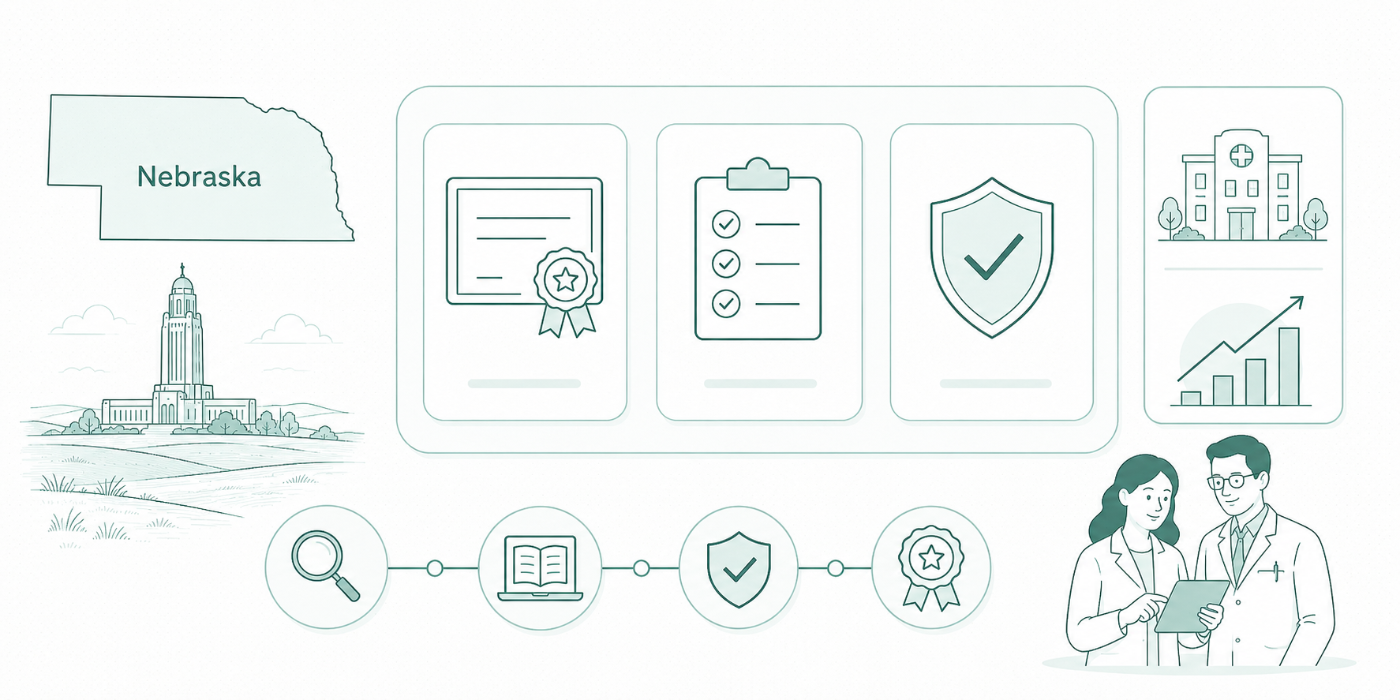
1. Why ICH-GCP Certification Matters in Nebraska in 2026-27
Nebraska has a practical clinical research landscape: academic centers, hospital systems, private sites, specialty clinics, rural health networks, and sponsor-driven trials all need people who can operate cleanly inside regulated research. A candidate who understands investigator responsibilities, ethical conduct and patient safety, serious adverse event reporting, clinical trial amendments, and risk-based monitoring can bring immediate value to a trial team.
The real pain for many Nebraska applicants is credibility. They complete GCP training, then struggle when a hiring manager asks what they would do if a participant signed the wrong consent version, missed a visit window, reported hospitalization, or had source notes that conflict with EDC data. A strong ICH-GCP path should prepare you to answer those scenarios using AE reporting compliance, clinical trial data review, GCP monitoring techniques, remote monitoring skills, and quality management strategies.
Nebraska candidates also need to think beyond the certificate itself. A CRC needs consent, scheduling, source documentation, visit-window control, patient follow-up, and monitor support. A CRA needs site communication, SDV/SDR logic, action-item tracking, and escalation discipline. A PV candidate needs safety-event classification, case intake, timelines, and confidentiality. A regulatory candidate needs IRB submissions, amendments, training logs, version control, and essential documents. Your GCP plan should connect with CRC retention strategies, clinical trial budget management, pharmacovigilance best practices, IND/NDA submission awareness, and clinical research career opportunities.
| Skill Area | Why It Matters | Common Candidate Weakness | How to Build Proof | CCRPS Resource |
|---|---|---|---|---|
| Informed consent control | Participant rights depend on clean consent before study procedures. | Wrong version, missing date, weak documentation of discussion. | Create a consent version checklist and re-consent trigger map. | Ethics and patient safety |
| Eligibility verification | Incorrect enrollment can damage safety, endpoints, and trial validity. | Checking criteria without source-backed evidence. | Build an inclusion/exclusion checklist with source-location notes. | Site operations oversight |
| Protocol deviation handling | Visit-window, procedure, and documentation errors need disciplined response. | Explaining deviations vaguely without root cause or CAPA. | Create a deviation tracker with impact, owner, action, and prevention. | Protocol deviations guide |
| SAE escalation | Hospitalization, life-threatening events, and serious outcomes require urgency. | Waiting too long while trying to gather perfect information. | Practice an SAE intake script and initial escalation memo. | SAE reporting procedures |
| AE documentation | Safety review depends on complete logs and investigator assessment. | Missing severity, causality, action taken, or outcome. | Prepare a mock AE log with field-level definitions. | AE reporting compliance |
| Source documentation | Source must support every CRF and EDC entry. | Notes lack dates, signatures, procedure detail, or correction clarity. | Map source notes to EDC fields and query responses. | Data review and verification |
| EDC query response | Slow queries delay database locks and frustrate sponsors. | Responding without checking source and audit trail logic. | Build a query tracker with response standards. | Clinical trial data review |
| Monitoring visit readiness | Prepared sites reduce findings, rework, and sponsor concern. | Cleaning binders only when the monitor is coming. | Use a 72-hour pre-monitoring checklist. | Site monitoring visits |
| Remote monitoring | Hybrid oversight needs secure access and organized documents. | Mislabeled files and missing context create repeat follow-ups. | Create a remote monitoring folder and file-naming system. | Remote and on-site monitoring |
| Risk-based monitoring | Modern trial oversight focuses on critical-to-quality risks. | Treating minor and major findings with the same urgency. | Build a risk register for consent, safety, endpoints, and data. | Risk-based monitoring |
| Delegation log review | PI oversight depends on proper task authorization. | Delegation logs and training records fail to match. | Create a delegation-and-training crosswalk. | Investigator responsibilities |
| Protocol amendment rollout | New versions affect consent, procedures, training, and source. | Using amended procedures before approval and training are documented. | Make an amendment activation checklist. | Clinical trial amendments |
| IRB communication | Ethics oversight needs timely, accurate, traceable submissions. | Confusing sponsor notification with IRB reporting duties. | Map what goes to IRB, sponsor, PI, and site file. | Ethics resources directory |
| Investigational product accountability | IP records are inspection-sensitive and patient-safety relevant. | Dispensing, returns, storage, and reconciliation drift apart. | Practice a mock IP reconciliation. | GCP investigator duties |
| Essential document control | Inspection readiness depends on complete, current files. | Missing approvals, outdated versions, incomplete signatures. | Create an essential-document index and missing-item tracker. | Clinical trial templates |
| Recruitment planning | Nebraska trials may face distance, access, awareness, and retention barriers. | Recruitment plans ignore patient burden and site capacity. | Build a recruitment barrier map. | Patient retention strategies |
| Retention workflows | Missed visits can weaken endpoints and increase deviations. | Calling participants only after visits are already missed. | Design reminder, transportation, and escalation workflows. | CRC retention tactics |
| Budget awareness | Site teams need to understand workload, invoices, and visit triggers. | Ignoring screen failures, unscheduled visits, and hidden work. | Map a schedule of activities to budget events. | Trial budget management |
| Timeline control | Start-up, enrollment, monitoring, and close-out need milestone discipline. | Seeing timelines as only the project manager’s responsibility. | Create a milestone tracker from feasibility to close-out. | Clinical trial timelines |
| Close-out readiness | Final visits expose unresolved data, IP, and document issues. | Treating close-out as late filing cleanup. | Build a close-out checklist covering data, IP, files, and actions. | Project close-out procedures |
| PI communication | Investigators need concise risk summaries and clear decision points. | Escalating too late or burying critical issues in noise. | Draft a weekly PI update template. | PI oversight techniques |
| Audit response behavior | Inspection confidence comes from factual, document-backed answers. | Speculating, guessing, or overexplaining. | Practice answer formats based on document location and issue status. | Audit and inspection techniques |
| PV basics | Safety awareness supports CRC, CRA, PV, and regulatory paths. | Confusing AE, SAE, severity, causality, and expectedness. | Create a safety-event comparison sheet. | Safety monitoring and PV |
| Regulatory awareness | Trial conduct supports broader regulatory evidence. | Separating site documentation from submission quality. | Map protocol conduct to regulatory evidence. | IND/NDA submissions |
| Quality management | CAPA thinking prevents repeated errors and sponsor frustration. | Fixing one error without correcting the process behind it. | Write a CAPA with root cause, action, owner, and effectiveness check. | Quality management strategies |
| Career positioning | Hiring teams need proof beyond course completion. | Resumes list certificates without tools, workflows, or examples. | Build a GCP portfolio with trackers, checklists, and scenarios. | Certificate programs compared |
2. How to Choose the Right ICH-GCP Certification Path in Nebraska
Choose your ICH-GCP certification path based on the role you want, because each clinical research role uses GCP differently. A Nebraska CRC candidate should focus on consent, visit flow, source documentation, patient scheduling, AE capture, EDC entry, and monitor support. A CRA candidate should focus on site oversight, SDV/SDR, remote monitoring, action items, and finding resolution. A PV candidate needs clinical trial safety monitoring, SAE reporting, PV audit readiness, global PV compliance, and AE reporting compliance.
A strong certification course should help you understand the full trial ecosystem: investigator duties, sponsor responsibilities, IRB oversight, informed consent, data quality, safety reporting, essential documents, monitoring, and quality systems. Weak training leaves people with definitions they cannot apply. Strong training helps you explain what happens when a protocol changes, a monitor finds missing source, a participant reports a serious event, or a site needs CAPA. Use clinical trial sponsor responsibilities, clinical trial amendments, interactive start-up checklists, GCP compliance self-assessment, and clinical trial templates to evaluate whether your training is practical enough.
Nebraska candidates should also look for certificate portability. A good ICH-GCP certificate should be easy to explain to a hospital, research site, CRO, sponsor, academic research team, or investigator-led trial group. It should support entry-level applications and career transitions from nursing, pharmacy, medical assisting, lab work, public health, data management, and healthcare administration. The strongest next move is pairing clinical research certification in Nebraska, clinical research assistant communication, clinical research professional associations, free clinical research training resources, and clinical research salary planning.
3. What You Need to Learn Before You Call Yourself GCP-Ready
Start with informed consent because consent mistakes can damage patient protection and site credibility quickly. You need to understand voluntary participation, adequate information, documentation before study procedures, privacy protection, re-consent triggers, version control, and participant questions. This matters in Nebraska because many candidates will support patients across busy clinics, specialty departments, rural access settings, and sponsor-driven timelines. Learn consent through ethical conduct in GCP, clinical research ethics resources, patient education resources, patient retention strategies, and patient-centered trial trends.
Next, learn protocol discipline. The protocol controls eligibility, procedures, endpoints, visit windows, safety assessments, investigational product use, and data collection. When something goes wrong, your job is to document facts, assess participant impact, involve the PI, follow protocol and SOP requirements, notify the right parties, and prevent repeat errors. This is where protocol deviation examples, handling deviations as a CRC, clinical trial amendments, risk-based monitoring strategies, and clinical trial quality management make your answers stronger.
Then, master safety communication. You should know how AE and SAE reporting differ, how severity differs from causality, how expectedness affects evaluation, and how follow-up information keeps safety files complete. A participant reporting hospitalization, emergency care, worsening symptoms, pregnancy, medication changes, or a new diagnosis may require structured follow-up. Safety readiness comes from studying serious adverse event reporting, AE compliance, clinical trial safety monitoring, PV audits and inspections, and global pharmacovigilance compliance.
Finally, learn data integrity. A Nebraska trial team needs source notes, CRFs, EDC entries, lab reports, visit timestamps, audit trails, and monitor responses to tell the same story. Data issues create queries, queries create delays, delays create sponsor frustration, and repeated inconsistencies create quality risk. Build your foundation with clinical trial data integrity, clinical trial data review, remote and on-site monitoring, site monitoring visits, and GCP monitoring techniques.
What is your biggest ICH-GCP certification blocker in Nebraska right now?
Choose the answer that matches your real bottleneck. Your result points to the fastest next move.
4. How to Turn ICH-GCP Certification into Job-Ready Proof
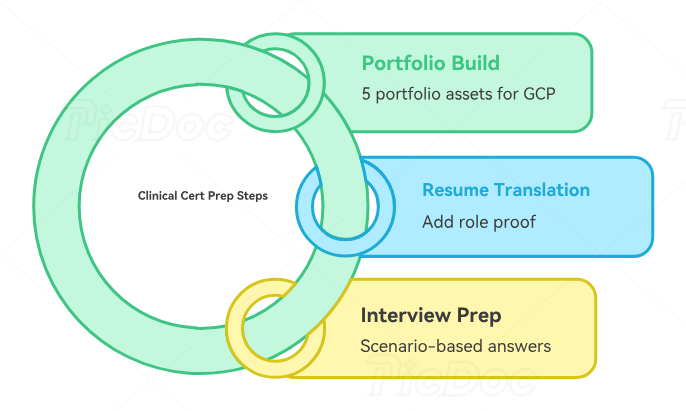
A certificate becomes valuable when it produces evidence. After finishing ICH-GCP training, create five simple portfolio assets: a consent checklist, a protocol deviation tracker, an SAE intake note, a monitoring visit preparation checklist, and an EDC query response tracker. These tools show that you understand site monitoring visits, CRA monitoring expectations, clinical trial data verification, clinical trial templates, and GCP self-assessment.
Your resume should translate certification into site language. Instead of stopping at “ICH-GCP certified,” add role-specific proof: trained in informed consent, protocol compliance, AE/SAE reporting, source documentation, data integrity, investigator oversight, and monitoring readiness. For CRC roles, emphasize participant scheduling, visit windows, source notes, retention, and monitor support. For CRA roles, emphasize SDV, SDR, risk prioritization, action-item tracking, and site communication. For PV roles, emphasize safety classification, case intake, timelines, and confidentiality. For regulatory roles, emphasize IRB submissions, amendment tracking, training records, and essential documents. Use clinical research certification in Nebraska, certificate program comparisons, professional association directories, free clinical research training resources, and clinical research career opportunities.
Interview preparation should be scenario-based. A strong answer to a deviation question should include facts, participant impact, PI involvement, sponsor notification requirements, documentation, CAPA, and prevention. A strong SAE answer should include immediate information collection, investigator assessment, reporting timelines, follow-up documentation, and confidentiality. A strong monitoring answer should include source readiness, unresolved queries, essential documents, delegation records, and action-item ownership. These answers prove that you can connect protocol deviation management, SAE reporting, investigator responsibilities, remote monitoring, and quality management.
5. Nebraska Career Strategy After GCP Certification
Nebraska candidates should choose a role lane early. CRC candidates need to prove they can support enrollment, consent, scheduling, source documentation, visit windows, EDC entries, AE capture, and patient retention. CRA candidates need to prove they can evaluate site conduct, monitor source, communicate findings, follow up on actions, and prioritize trial risks. PV candidates need safety-event logic, case-processing discipline, and audit awareness. Regulatory candidates need version control, submission tracking, essential-document maintenance, and amendment readiness. Each lane can be strengthened through CRC retention strategies, risk-based CRA monitoring, PV safety monitoring, IND/NDA submission knowledge, and clinical trial project timelines.
Entry-level applicants often struggle because they sound generic. They say they are detail-oriented, passionate, organized, and willing to learn. Hiring teams need stronger proof. Say you can help prevent consent errors, keep source aligned with EDC, escalate safety concerns, prepare for monitoring visits, track deviations, and support PI oversight. That language makes your certificate feel operational. It also connects your training to data integrity responsibilities, monitoring visit preparation, clinical trial site operations, budget management for CRCs, and project close-out procedures.
Healthcare workers moving into clinical research can use prior experience well. Nurses, medical assistants, pharmacists, lab professionals, public health workers, and healthcare administrators may already understand privacy, documentation, patient education, scheduling pressure, and escalation. The missing layer is regulated trial language. Translate your background into GCP terms: source documentation, participant protection, investigator oversight, AE capture, protocol compliance, and quality control. Then support that bridge with clinical research assistant communication, patient education resources, virtual clinical trial trends, clinical trial technology innovations, and clinical research salary tools.
For long-term growth, treat ICH-GCP as the first layer. Add role-specific depth every month. Study consent and source this month, deviations and CAPA next month, safety reporting after that, monitoring readiness after that, and regulatory documents after that. Keep building practical proof. A Nebraska candidate who can show checklists, mock logs, tracker examples, and scenario answers becomes easier to trust. That growth path can be supported by investigator meeting strategies, pharmacovigilance audits, global regulatory compliance, leadership in clinical trial PM, and clinical research professional associations.
6. FAQs About ICH-GCP Certification in Nebraska
-
Many employers, sponsors, research sites, and institutions expect GCP training for people involved in clinical trial conduct, oversight, documentation, monitoring, or safety reporting. Requirements vary by role and organization, but Nebraska candidates applying for CRC, CRA, PV, regulatory, or site-support positions are stronger with documented training. Pair the certificate with Nebraska clinical research certification, GCP compliance knowledge, investigator responsibility training, and site monitoring visit preparation.
-
Many GCP courses can be completed quickly, but real job readiness takes additional practice. Spend time on informed consent, source documentation, AE and SAE reporting, protocol deviations, EDC queries, investigator oversight, and monitoring visit preparation. The certificate opens the door; practical fluency helps you keep the conversation going with employers. Study protocol deviation examples, SAE reporting procedures, clinical trial data review, and quality management strategies.
-
Study based on your target job. Future CRCs should focus on consent, visits, source, retention, EDC, and monitoring support. Future CRAs should study SDV, SDR, risk-based monitoring, follow-up letters, and site communication. PV candidates should study safety-event classification, case processing, reporting timelines, and audits. Regulatory candidates should study IRB submissions, amendments, version control, and essential documents. Strong next steps include CRC strategies, remote monitoring, pharmacovigilance best practices, and clinical trial amendments.
-
Use the certificate as proof of readiness, then build visible evidence around it. Add resume bullets for informed consent, protocol compliance, AE/SAE reporting, source documentation, data integrity, monitoring readiness, and investigator oversight. Prepare short scenario answers. Build a small portfolio with mock logs, checklists, and trackers. This approach aligns with clinical research career opportunities, certificate program comparisons, professional association directories, and free clinical research training resources.
-
GCP certification helps, and CRC readiness requires more operational skill. You need to understand patient scheduling, informed consent, eligibility review, visit windows, source documentation, EDC entry, AE capture, query response, patient retention, and monitor support. A stronger plan combines GCP with site monitoring visit guidance, CRC patient retention strategies, clinical trial budget management, deviation handling for CRCs, and clinical trial templates.
-
Many research organizations require refresher training on a set cycle, and some funders or employers define their own timelines. A practical approach is to refresh when your employer requires it, when a certificate expires, when you change roles, or when major GCP guidance changes affect training expectations. Refreshers should strengthen your practical weak spots too: AE reporting, clinical trial safety monitoring, GCP monitoring techniques, and clinical trial data integrity.
