
The Ultimate Guide to Getting Your Good Clinical Practice (ICH-GCP) Certification in Hawaii: Everything You Need to Know in 2026-27
Hawaii clinical research has a different pressure profile than large mainland markets because geography, patient access, travel logistics, cultural trust, and site coordination can shape whether a study succeeds. That makes Good Clinical Practice training, clinical research certification in Hawaii, GCP compliance readiness, and clinical trial site operations especially valuable in 2026-27.
An ICH-GCP certificate becomes powerful when it proves you can protect participants, document cleanly, prevent avoidable deviations, and support credible data in real study conditions.
1. Why ICH-GCP Certification Matters in Hawaii in 2026-27
Hawaii clinical research professionals often work in environments where each participant interaction carries extra operational weight. A missed visit, unclear consent conversation, incomplete source note, delayed safety escalation, or weak retention plan can create larger problems when participants live across islands, rely on limited transport, or need careful coordination around local care. That is why ICH-GCP certification, ethical conduct and patient safety, investigator responsibilities under GCP, and clinical trial data integrity matter far beyond basic credentialing.
The strongest candidates understand that Hawaii’s research setting rewards precision and respect. Informed consent has to be more than a signature. It has to show comprehension, timing, approved version control, documented questions, and participant-centered communication. Source documentation has to be complete enough for a monitor to reconstruct what happened without guessing. Safety reporting has to separate urgency from uncertainty because adverse events, hospitalization reports, abnormal labs, and protocol-required follow-up can move quickly. If you study serious adverse event reporting, protocol deviation examples, clinical trial amendments, and site monitoring visit preparation, your GCP certificate becomes practical evidence.
A common pain point for Hawaii applicants is sounding certified without sounding ready. Employers can usually tell when someone memorized GCP terms but cannot explain what they would do if a participant signs the wrong consent version, misses a protocol visit window, reports a hospitalization, or has EDC data that conflicts with source. A useful ICH-GCP pathway should help you explain the sequence: protect the participant, preserve data integrity, notify the right person, document facts clearly, follow protocol and SOPs, and support corrective action. That sequence connects directly with adverse event reporting compliance, GCP monitoring techniques, risk-based monitoring strategies, and quality management strategies.
2. What ICH-GCP Certification Actually Covers
A strong ICH-GCP certification teaches the operating logic of responsible clinical research. It should connect participant rights, safety, informed consent, investigator oversight, sponsor responsibilities, IRB review, essential documents, monitoring, safety reporting, and credible data. The best training helps you understand how GCP compliance self-assessment, clinical trial startup checklists, clinical trial templates, and clinical research ethics resources fit into real study execution.
For Hawaii candidates, the practical side matters most. Informed consent should be documented in a way that proves the participant had the right approved form, enough time, clear communication, and the opportunity to ask questions before research procedures. Source documentation should show what happened, when it happened, who did it, and why it matters to the protocol. Safety reporting should separate adverse events, serious adverse events, severity, expectedness, causality, and reporting timelines. These concepts appear repeatedly in clinical trial data review, site monitoring visits, protocol deviation corrective actions, and clinical trial safety monitoring.
Modern GCP also pushes candidates toward risk-based thinking. A site should put heavier attention on issues that can harm participants, weaken consent, compromise eligibility, distort primary endpoint data, delay safety reporting, or create inspection findings. Hawaii professionals can use that mindset to prioritize limited time better. A missed noncritical administrative item and a missing eligibility source document deserve different urgency. A delayed routine signature and an unreported hospitalization deserve different escalation. That judgment is strengthened through risk-based monitoring mastery, quality management strategies, clinical trial sponsor responsibilities, and remote monitoring techniques.
3. How to Choose the Right ICH-GCP Certification Program for Hawaii Careers
Choose your ICH-GCP certification by asking whether it will help you perform in a real study environment. A useful program should teach the rules and the workflows behind them. It should help you answer what happens after a consent error, how a deviation is documented, when an SAE is escalated, how source and EDC are reconciled, how a monitoring finding becomes corrective action, and how protocol amendments affect staff training. You can compare pathways through clinical research certificate program comparisons, free clinical research training resources, clinical research professional associations, and clinical research career opportunity mapping.
Role fit should guide your study plan. A future CRC in Hawaii should prioritize visit coordination, participant communication, consent, source notes, recruitment, retention, EDC queries, and protocol deviation prevention. A future CTA should prioritize TMF tracking, regulatory binders, training logs, startup documents, vendor communication, and follow-up discipline. A future CRA should prioritize monitoring vocabulary, SDV/SDR, issue escalation, CAPA, risk signals, and site communication. A future regulatory candidate should prioritize IRB submissions, amendments, consent-version control, continuing reviews, and essential documents. Build that direction with clinical research certification in Hawaii, CRA exam time management, clinical trial amendments, and project close-out procedures.
The fastest way to test a course is to check whether you can explain five scenarios after finishing it. First, a participant signs an outdated consent form. Second, a visit happens outside the protocol window. Third, a participant reports hospitalization. Fourth, source data conflicts with the EDC record. Fifth, a monitor identifies repeat findings across visits. A good certification should help you describe documentation, escalation, corrective action, and prevention for each situation. Strengthen that ability with SAE reporting procedures, protocol deviation examples, clinical trial budget management, and collaboration strategies for research assistants.
What is your biggest ICH-GCP certification blocker in Hawaii right now?
Choose one. Your answer points to the fastest way to turn training into job-ready proof.
4. Step-by-Step Plan to Earn ICH-GCP Certification in Hawaii
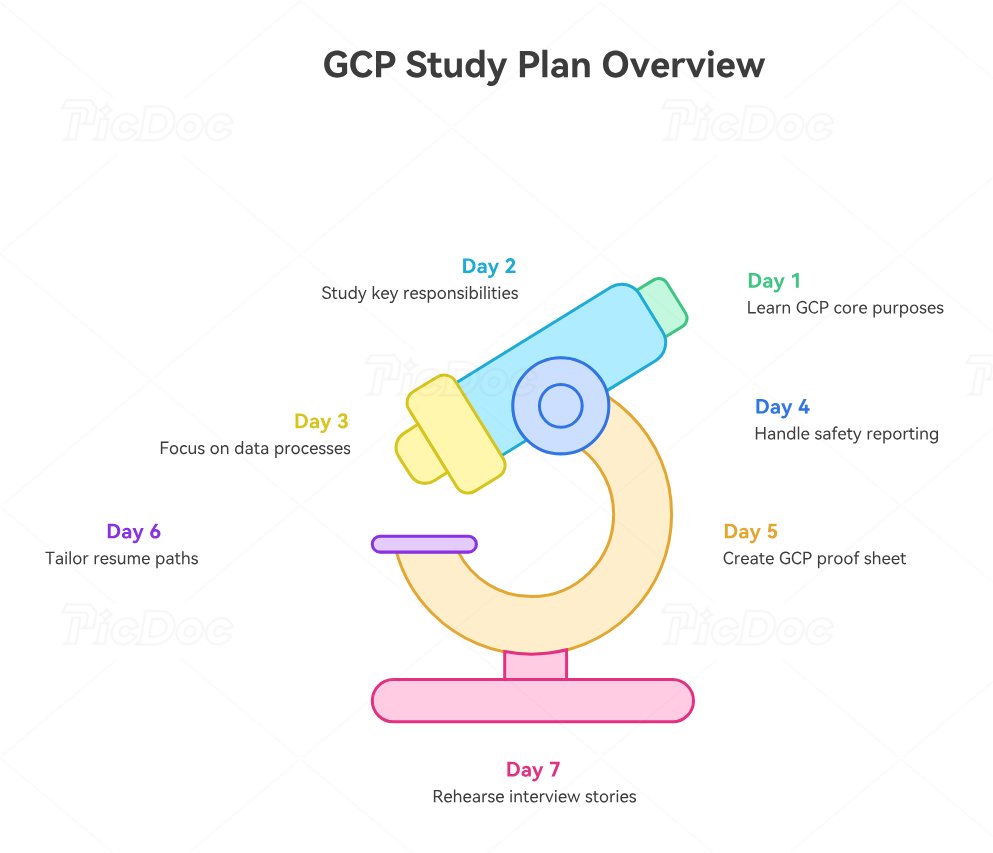
Start with a course that teaches current GCP principles, then study by workflow rather than by definition alone. On day one, focus on why GCP exists: participant rights, safety, well-being, and reliable data. On day two, study informed consent, investigator responsibilities, sponsor responsibilities, IRB responsibilities, delegation, and essential records. On day three, study monitoring, source documentation, EDC, protocol compliance, and audit trails. On day four, work through adverse event reporting, SAE reporting procedures, protocol deviation handling, and clinical trial safety monitoring.
On day five, create a one-page Hawaii GCP proof sheet. Divide it into consent, source documentation, safety reporting, deviations, monitoring, retention, and data integrity. Under each category, write one action sentence. For consent, write that you verify the approved version, confirm timing before study procedures, document participant questions, and escalate any irregularity. For retention, write that you track visit windows, communication attempts, travel barriers, and follow-up plans. For data, write that you reconcile EDC entries with source and preserve the audit trail. Reinforce the sheet with clinical trial data integrity guidance, site operations oversight, patient retention strategies, and patient education resources.
On day six, tailor your resume for one target path. CRC applicants should highlight participant communication, scheduling, visit windows, source notes, and compliance. CTA applicants should highlight tracking, regulatory files, vendor documents, training records, and follow-up. CRA applicants should highlight monitoring terminology, risk-based thinking, issue escalation, CAPA, and site communication. Regulatory applicants should highlight IRB submissions, amendments, version control, and essential documents. Safety applicants should highlight AE/SAE logic, timelines, and escalation discipline. Use clinical research salary tools, clinical research career maps, clinical research professional associations, and clinical research communities to sharpen your positioning.
On day seven, rehearse five interview stories. One should show documentation accuracy. One should show ethical judgment. One should show calm escalation. One should show participant-centered communication. One should show coordination under logistical pressure. Hawaii clinical research teams need candidates who can respect community trust while keeping protocol requirements clean. That balance is easier when you study leadership and team management, clinical trial timeline management, project close-out procedures, and clinical trial sponsor best practices.
5. Hawaii Career Paths After ICH-GCP Certification
ICH-GCP certification can support several Hawaii career paths, but every path needs a different proof strategy. A CRC path should emphasize consent, recruitment, source notes, visit coordination, participant follow-up, EDC queries, and deviation prevention. A CTA path should emphasize essential documents, TMF support, startup trackers, training logs, vendor communication, and deadline control. A CRA path should emphasize monitoring reports, SDV/SDR, issue prioritization, CAPA follow-up, risk indicators, and site relationships. A regulatory path should emphasize IRB submissions, amendments, continuing review, consent versions, and investigator files. Build those angles with clinical research certification in Hawaii, clinical trial regulatory guidelines, clinical trial template directories, and GCP monitoring techniques.
Specialization can make a Hawaii candidate more memorable. Oncology research values eligibility precision, cycle timing, safety follow-up, and clean documentation. Neurology research values endpoint consistency, caregiver communication, retention, and source clarity. Infectious disease research values enrollment readiness, specimen workflows, protocol timing, and safety awareness. Digital and decentralized trials value technology access, data-source ownership, vendor oversight, remote follow-up, and participant support. Strengthen those angles through oncology research resources, neurology clinical trial site resources, infectious disease clinical research directories, and virtual clinical trial trends.
The biggest career mistake after certification is applying everywhere with the same resume. A Hawaii candidate should build versions for CRC, CTA, CRA, regulatory, data, safety, or project roles instead of forcing one document to cover every opportunity. Use role-specific verbs: consented, tracked, reconciled, escalated, documented, verified, reviewed, coordinated, prepared, followed up, and resolved. Then attach those verbs to GCP outcomes. For stronger positioning, study clinical trial budget management, remote monitoring mastery, pharmacovigilance audit techniques, and quality management strategies.
Think locally and flexibly. Honolulu and Oahu may offer more visible research opportunities, while remote-friendly trial operations, sponsor support, data roles, regulatory documentation, and regional CRO pathways can widen the field. Neighbor-island logistics can also become a strength if you know how to discuss retention, documentation, access, and protocol adherence with maturity. Keep building with top clinical trial technology innovations, clinical research master’s program rankings, clinical trial patient education resources, and research networking communities.
6. FAQs About ICH-GCP Certification in Hawaii
-
Yes. Hawaii clinical research candidates can use ICH-GCP certification to show readiness for site, sponsor, CRO, regulatory, data, safety, and project workflows. The certificate becomes stronger when you pair it with practical knowledge of clinical research certification in Hawaii, GCP compliance self-assessment, site monitoring visits, and clinical trial data integrity.
-
Many online ICH-GCP courses can be completed quickly, but job-ready understanding takes additional practice. Plan time for consent scenarios, deviation examples, SAE classification, source documentation, monitoring findings, and CAPA thinking. The strongest path is certification plus scenario practice using SAE reporting procedures, protocol deviation examples, adverse event reporting compliance, and quality management strategies.
-
Clinical research coordinators, clinical trial assistants, clinical research associates, regulatory assistants, data coordinators, safety associates, research nurses, site startup specialists, and project coordinators all benefit from GCP training. Each role uses the credential differently. CRCs lean on patient retention strategies, CRAs lean on risk-based monitoring, regulatory teams lean on clinical trial amendments, and safety teams lean on pharmacovigilance best practices.
-
List the provider, completion date, and renewal details in a certification section. Then reinforce the credential through resume bullets that show trial readiness. Mention informed consent support, source documentation accuracy, deviation prevention, AE/SAE escalation awareness, TMF tracking, data review, monitoring readiness, participant follow-up, or retention support. Use clinical research salary tools, clinical research career maps, clinical research professional associations, and clinical research communities to sharpen your positioning.
-
Yes, especially if you target entry-level CRC assistant, CTA, regulatory assistant, site support, recruitment, data, document-control, or patient-facing support roles. Your application should show transferable proof: accurate documentation, scheduling, patient communication, healthcare terminology, compliance awareness, database comfort, and escalation discipline. Build that bridge with collaboration strategies for research assistants, clinical trial patient education resources, startup checklist tools, and clinical trial templates.
-
Study the workflows attached to your target role. Future CRCs should learn visit windows, consent documentation, source notes, EDC basics, recruitment ethics, participant retention, and deviation prevention. Future CRAs should learn monitoring reports, SDV/SDR, CAPA, site communication, and risk signals. Future regulatory professionals should learn IRB submissions, amendments, continuing review, and essential documents. Next-step resources include GCP monitoring techniques, clinical trial data review, clinical trial safety monitoring, and clinical trial timeline management.
