
The Ultimate Guide to Getting Your Good Clinical Practice (ICH-GCP) Certification in Washington: Everything You Need to Know in 2026–27
Washington offers serious clinical-research opportunities across academic medicine, oncology, pediatrics, infectious disease, biotechnology, and community-based research. Entry into that ecosystem requires more than downloading a generic completion certificate. Candidates must understand current ICH E6(R3) expectations, confirm institutional acceptance, document training correctly, and show that they can apply GCP principles to consent, safety, data integrity, protocol compliance, and oversight. This guide provides a practical 2026–27 pathway for earning a credible ICH-GCP certification and converting it into job-ready evidence.
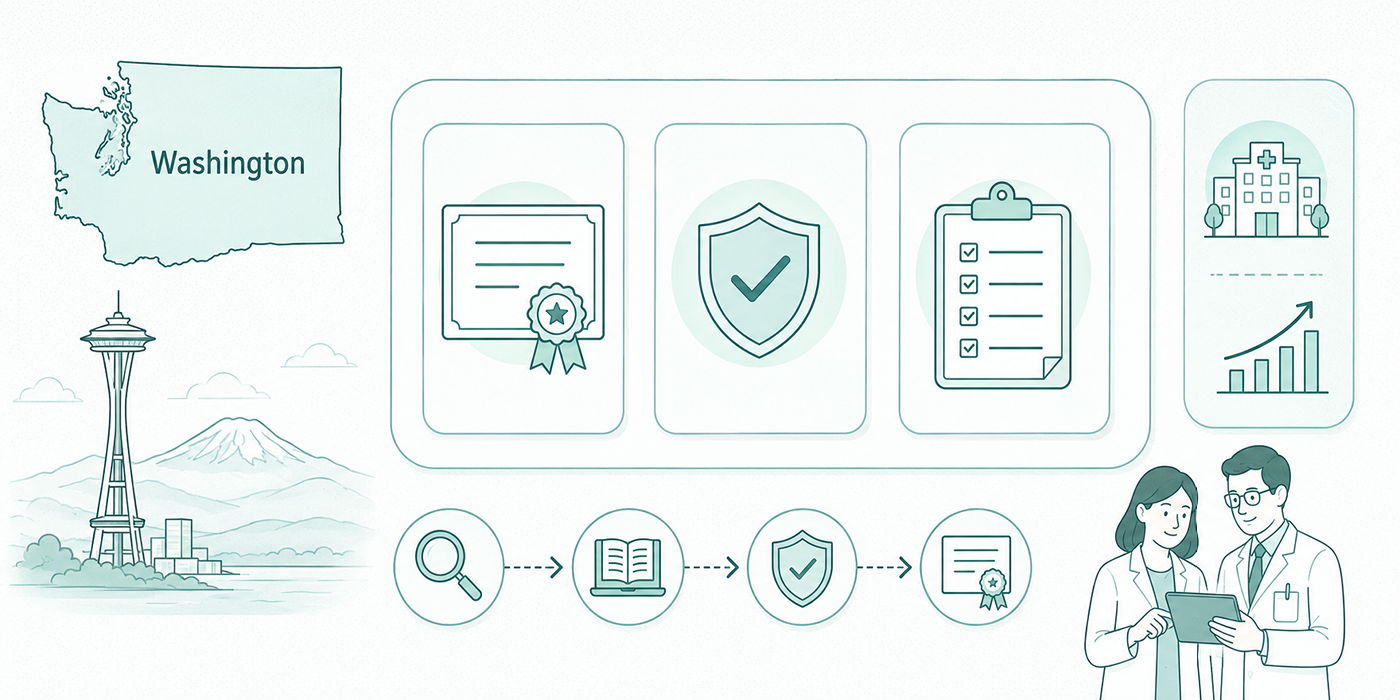
1. What ICH-GCP Certification Means in Washington in 2026–27
Good Clinical Practice is the international ethical, scientific, and quality framework used to design, conduct, record, oversee, and report clinical trials involving human participants. ICH E6(R3) reached Step 4 in January 2025, and the FDA issued its final E6(R3) guidance in September 2025. The revision places stronger emphasis on quality by design, proportional risk management, reliable decision-making, fit-for-purpose systems, participant protection, and technology-enabled trial conduct.
For a Washington professional, GCP training should create practical understanding of ethical conduct and patient safety, investigator responsibilities, adverse-event reporting, protocol-deviation management, and clinical-trial data integrity. Those principles follow a professional into every regulated workflow, from screening the first participant to resolving the final data query.
Washington does not issue one universal state license called an “ICH-GCP certification.” Training records are generally awarded by education providers, employers, universities, sponsors, professional organizations, or institutional learning platforms. The organization receiving the certificate determines whether it satisfies its requirements. A course can therefore be educationally useful while still failing an employer’s onboarding rule because it covers an older guideline, lacks required modules, omits a verifiable completion date, or comes from a provider the institution does not recognize.
Institutional variation is especially important in Washington. The University of Washington provides affiliated researchers with CITI access for Human Subjects Protections, Good Clinical Practice, Responsible Conduct of Research, and community-engaged research training. UW also offers refresher options for GCP and human-subject protections. Washington State University states that GCP training is required for personnel involved in NIH-funded clinical trials, while its broader CITI requirements depend on the project and role.
That distinction prevents a common career mistake. A clinical research certification, GCP certificate, human-subject protection course, privacy module, protocol training, and system-access training each answer different competency questions. Someone working on an NIH-funded drug trial may need GCP, human-subject protections, HIPAA or privacy education, protocol-specific instruction, safety-reporting training, and platform training before receiving independent responsibilities.
GCP certification also differs from professional certification. Completing a course demonstrates that you studied a defined body of principles. It does not automatically establish the experience required for a CRA, CRC, project manager, regulatory specialist, or principal-investigator credential. Professionals pursuing CRA monitoring mastery, coordinator retention skills, pharmacovigilance knowledge, regulatory submissions expertise, or clinical project leadership must build applied competence around the certificate.
A high-value course should teach you to recognize the operational consequences of weak decisions. An outdated consent form can invalidate the participant’s authorization. An undocumented eligibility judgment can place safety and evaluability at risk. A delayed serious adverse-event escalation can expose participants and the study to avoidable harm. Missing audit-trail review can hide unauthorized data changes. Weak delegation controls can leave critical tasks with staff who lack documented qualifications. Those are the problems hiring managers expect GCP-trained professionals to understand.
| Decision Point | What a Strong Course Should Include | Why It Affects Your Career | High-Risk Warning Sign | Best Next Action |
|---|---|---|---|---|
| ICH version | Explicit ICH E6(R3) coverage | Shows that your knowledge reflects current expectations | The syllabus mentions only E6(R2) | Choose updated training and use the GCP compliance self-assessment |
| Provider identity | Transparent organization, instructors, contact details, and policies | Employers need defensible and verifiable training records | No faculty information or support channel | Compare established clinical research certificate programs |
| Learning objectives | Measurable competencies tied to trial responsibilities | Clarifies what the certificate proves | Broad claims without a module list | Request the complete syllabus before paying |
| Participant protection | Rights, welfare, risk, privacy, and vulnerable populations | Participant protection guides every GCP decision | Ethics receives only a brief overview | Use the ethics and compliance directory |
| Informed consent | Process, documentation, capacity, re-consent, and version control | Consent failures create major ethical and inspection exposure | Training focuses only on collecting signatures | Treat consent as an ongoing documented process |
| IRB interaction | Initial review, amendments, reportable events, and continuing oversight | Research teams must know what requires IRB action | The course suggests the IRB manages site operations | Separate institutional review from investigator responsibility |
| Investigator duties | Supervision, delegation, qualifications, and accountability | Delegating a task does not erase oversight obligations | A signed delegation log is treated as complete oversight | Study investigator GCP responsibilities |
| Sponsor duties | Quality management, monitoring, safety, and vendor oversight | Sites work inside sponsor-controlled systems | Sponsor accountability is barely discussed | Review clinical-trial sponsor responsibilities |
| Quality by design | Identification of critical-to-quality factors before execution | Prevention is stronger than retrospective correction | Quality means checking documents at study close | Build knowledge through clinical quality-management strategies |
| Risk proportionality | Controls matched to meaningful participant and data risks | Teams must direct effort toward consequential failures | Every discrepancy receives identical treatment | Learn risk-based monitoring strategies |
| Protocol execution | Eligibility, procedures, visit windows, and escalation | Operational errors can compromise safety and interpretability | The course teaches protocol reading without control systems | Review protocol-deviation examples |
| Amendment control | Approval, implementation, training, and document replacement | Premature implementation can create compliance failures | No distinction between urgent and routine changes | Study clinical-trial amendment controls |
| Safety reporting | AE, SAE, severity, causality, expectedness, and timelines | Correct classification drives timely escalation | Safety terms are presented as interchangeable | Master SAE reporting procedures |
| Source documentation | Contemporaneous entries, corrections, and traceability | Source records must support trial decisions | Retrospective reconstruction is normalized | Create controlled documentation workflows |
| Data integrity | Complete, attributable, accurate, consistent, and traceable records | Unreliable records weaken participant and regulatory decisions | Data quality is assigned entirely to data management | Review clinical-trial data-integrity duties |
| Computerized systems | Access control, validation, audit trails, security, and continuity | Modern trials depend on distributed electronic evidence | Technology appears without governance requirements | Study clinical-trial technology developments |
| Privacy and security | Role-based access, confidentiality, storage, and transfer controls | Human-subject data requires documented protection | GCP is presented as a substitute for privacy training | Confirm institution-specific privacy requirements |
| Decentralized elements | Remote visits, devices, home health, eConsent, and local providers | Distributed activity creates additional oversight points | Every trial is assumed to operate at one physical site | Review virtual clinical-trial operations |
| Vendor oversight | Qualification, responsibilities, metrics, escalation, and documentation | Outsourced work still requires accountable supervision | Vendor contracts are treated as proof of oversight | Map operational ownership before study activation |
| Essential records | Creation, filing, access, maintenance, and retention | Records must reconstruct trial conduct and decisions | The course offers only a static document list | Use the clinical-trial template directory |
| Monitoring methods | Centralized, remote, on-site, and targeted monitoring | Current oversight uses multiple data sources | Monitoring is reduced to source-data verification | Study remote and on-site monitoring |
| Inspection readiness | Retrievable evidence, consistent staff knowledge, and issue history | Readiness must exist before an inspection notice arrives | Preparation begins only when an audit is scheduled | Maintain inspection-ready records throughout the trial |
| Root-cause analysis | Process analysis, ownership, deadlines, and effectiveness checks | Repeated errors show that correction failed | Retraining is prescribed for every problem | Separate human error from system failure |
| Role relevance | Scenarios for coordinators, monitors, investigators, safety, or data staff | Role-specific decisions improve practical transfer | Examples never identify who should act | Match training with clinical-research career paths |
| Assessment quality | Scenario-based questions and a defined passing score | Application testing reveals decision readiness | Answers can be copied without studying | Choose a course with substantive assessment |
| Certificate metadata | Course title, version, date, provider, score, and verification details | Complete records simplify onboarding and audits | The certificate omits the ICH version | Inspect a sample certificate before enrollment |
| Renewal policy | Clear refresher interval and update process | Organizations may enforce different validity periods | Unqualified “lifetime certification” claims | Use a three-year maximum planning interval |
| Employer acceptance | Confirmation from the target institution or sponsor | Acceptance cannot be guaranteed by marketing language | The provider promises universal approval | Ask research compliance before purchasing |
| Training records | Downloadable certificate, transcript, and accessible history | Evidence may be requested years after completion | Your record disappears when platform access ends | Store controlled copies in multiple locations |
| Career application | Ability to explain how GCP changes trial decisions | Employers assess judgment alongside credentials | You can define terms but cannot resolve a scenario | Practice through free clinical-research training resources |
2. How to Choose a Washington ICH-GCP Course Employers Will Respect
Begin with the target organization rather than the course provider’s sales page. Ask the employer, research office, IRB team, sponsor, or hiring manager which provider, curriculum, guideline version, and renewal interval it accepts. This single check can prevent you from spending time and money on a course that later has to be repeated through an institutional system.
Course content should explicitly address ICH E6(R3). Current training should explain critical-to-quality factors, proportionate risk management, participant-centered trial design, fit-for-purpose data collection, computerized systems, service-provider oversight, and reliable evidence generation. Annex 2 reached Step 4 in June 2026 and expands the framework’s application to pragmatic trials, decentralized elements, and trials using real-world data sources. A course positioned for 2026–27 should explain how modern trial models change oversight, data provenance, consent, safety communication, and responsibility assignment.
The title “GCP course” provides very little information by itself. Inspect the learning objectives and module list. Strong training should cover informed-consent responsibilities, protocol compliance controls, clinical safety monitoring, data-review and verification, and site-operations oversight. A certificate built from shallow modules may satisfy a checkbox while leaving the learner unable to protect a study.
Match the curriculum to your desired role. A coordinator needs applied instruction in patient-retention strategy, monitoring-visit preparation, site budget management, and deviation prevention. A CRA candidate needs deeper preparation in risk-based monitoring, remote and on-site visits, investigator-meeting management, and clinical-data verification.
Principal investigators and sub-investigators need clear instruction on supervision, medical decisions, safety review, delegation, resources, investigational-product accountability, and record reliability. Those learners should connect GCP education with PI site-operations oversight, investigator-initiated trial management, PI budget responsibilities, and investigator data-integrity duties.
Assessment quality deserves close scrutiny. Vocabulary quizzes confirm recall. Scenario-based assessments reveal whether the learner can identify an outdated consent form, late SAE report, uncontrolled data correction, incomplete delegation record, undocumented eligibility exception, or missed visit-window procedure. Look for explanations after incorrect answers, a meaningful passing threshold, and cases that require the learner to identify both the immediate response and the underlying process weakness.
Provider recognition also requires precise language. Claims such as “internationally recognized,” “globally accepted,” or “valid everywhere” should trigger verification. Acceptance comes from the receiving institution’s policy. Compare the provider’s curriculum against global regulatory guidance, clinical-research ethics resources, professional association expectations, and certificate-program comparisons.
3. The Step-by-Step Process for Earning and Documenting Your Certificate
Start by defining why you need the credential. A current employee assigned to an NIH-funded clinical trial has a different requirement from a job seeker building foundational knowledge. A coordinator transferring into oncology has different learning gaps from a data manager entering decentralized trials. Write down the role, study type, employer, funding source, deadline, required version, and additional training obligations before enrolling.
Next, confirm institutional requirements in writing. UW offers CITI-based GCP training to affiliated users and provides separate human-subject protection education. WSU identifies GCP as a requirement for NIH-funded clinical-trial personnel. UW guidance also demonstrates why one general course cannot replace every control: its data-security guidance requires documented confidentiality and security education for personnel with ongoing data access and explicitly states that general CITI human-subject training alone is insufficient for that requirement.
Then audit the syllabus against a practical competency map. Your checklist should include participant rights, informed consent, IRB communication, investigator duties, sponsor oversight, protocol compliance, safety reporting, data integrity, essential records, computerized systems, monitoring, audits, vendor management, noncompliance, and corrective action. Use the GCP compliance self-assessment, clinical-trial start-up checklist, clinical-trial template directory, and global regulatory directory to identify missing operational topics.
Complete the course with an evidence-building method. For each module, write down the responsible person, required action, supporting record, escalation path, and consequence of failure. During safety training, connect AE and SAE concepts with pharmacovigilance best practices and SAE reporting procedures. During protocol training, connect implementation decisions with trial amendment controls and protocol-deviation CAPA.
Treat the final assessment as a diagnostic. Review every error, even after passing. Explain why the incorrect option would threaten participant safety, data reliability, regulatory compliance, or traceability. Turn missed questions into short operational scenarios. This process creates stronger interview preparation than memorizing definitions because research teams hire people who can recognize developing risks before they become findings.
After completion, preserve the certificate, score report, syllabus, ICH version, provider-verification instructions, and training date. Keep a secure local copy and an approved cloud or organizational copy. Record the renewal date in a training tracker. NIH expects personnel involved in the conduct, oversight, or management of NIH-funded clinical trials to receive GCP training, retain documentation, and refresh that training at least every three years. NIH confirmed in April 2026 that GCP training consistent with ICH E6(R3) meets its requirement.
Finally, create role-specific evidence. Build a mock eligibility checklist, consent-version tracker, source-documentation quality review, SAE escalation map, monitoring follow-up letter, deviation log, or training matrix. Draw supporting formats from clinical-trial templates, patient-education resources, free clinical-research webinars, and clinical-trial technology resources. Label every exercise as simulated work so employers can evaluate your thinking without being misled about your experience.
What is blocking your Washington clinical-research career right now?
Choose the problem creating the greatest delay. Your result will identify the highest-value next step.
4. How to Turn Your Certification Into a Washington Clinical Research Opportunity
Washington’s research environment includes major academic, oncology, pediatric, infectious-disease, and multisite research programs. Fred Hutchinson Cancer Center serves as UW Medicine’s cancer program and reports a large portfolio of active clinical trials. Seattle Children’s operates clinical research programs and a centralized Clinical Research Support Office that provides operational resources, education, and processes for investigators and staff. These organizations illustrate the depth of the state’s research ecosystem and the level of operational discipline candidates may encounter.
Begin with role selection. A clinical research coordinator typically owns participant-facing and site-execution tasks such as screening, scheduling, consent support, source documentation, data entry, safety communication, and visit coordination. Build readiness through effective patient-retention strategies, site monitoring-visit preparation, clinical-trial budget management, and CRC deviation handling.
A CRA evaluates whether sites protect participants, follow the protocol, maintain reliable records, resolve issues, and operate under adequate oversight. GCP knowledge becomes stronger when paired with monitoring-visit mastery, risk-based monitoring strategy, clinical data-review skills, and investigator-meeting preparation.
Regulatory and start-up candidates should learn how document dependencies control activation. An informed-consent form cannot be used merely because the sponsor approved it. A protocol amendment cannot enter routine use before required approvals and training are complete. A site cannot delegate regulated activity to unqualified personnel and solve the problem through retrospective paperwork. Develop that judgment through the clinical start-up checklist generator, IND application guide, clinical-trial amendment guide, and regulatory guideline directory.
Safety-focused candidates should be able to distinguish seriousness, severity, causality, and expectedness without collapsing them into one judgment. They should understand reporting pathways, follow-up information, reconciliation, signal awareness, and the effect of incomplete source documentation. Pair GCP training with pharmacovigilance safety monitoring, SAE reporting procedures, global pharmacovigilance compliance, and pharmacovigilance inspection preparation.
Your résumé should state the exact course title, provider, ICH version, completion date, and renewal date where applicable. The credential becomes more persuasive when nearby experience statements show exposure to essential-document control, GCP monitoring methods, clinical-trial quality systems, and patient-safety principles.
Interview preparation should center on decisions. Practice explaining how you would respond to a participant signing an obsolete consent version, an eligibility value outside the protocol range, an SAE learned after the sponsor deadline, a missing principal-investigator review, or an electronic record changed without a clear audit trail. State the immediate action, people requiring notification, evidence to preserve, participant impact, and preventive control. That structure reveals dependable judgment.

5. Renewal, E6(R3) Readiness, and Long-Term Career Growth
Use three years as the longest default renewal-planning interval when NIH requirements apply. Your sponsor, employer, institution, or study network may impose a shorter cycle. Renewal may also become necessary when your responsibilities change, the applicable guideline changes, an organization updates its policy, or you return after a prolonged gap in clinical-trial work. NIH requires covered personnel to retain documentation and refresh GCP training at least every three years.
Track more than an expiration date. Maintain a training record containing the provider, course title, ICH version, completion date, result, certificate location, renewal deadline, institutional acceptance, and related study assignments. Add evidence of continuing development through free clinical-research training, clinical professional associations, research networking communities, and clinical-research career mapping.
Year one should focus on execution. Learn how protocols become workflows, how trial decisions are documented, and how deviations develop. Year two should deepen a specialization through remote-monitoring techniques, regulatory submission knowledge, trial-timeline management, or clinical project quality. Year three should include a gap assessment, updated training, and stronger evidence of independent judgment.
E6(R3) readiness depends on the way you think about quality. Identify which trial factors are critical to participant safety and reliable conclusions. Direct controls toward those factors. Avoid adding low-value procedures that increase workload while hiding meaningful risks. Confirm that systems, vendors, data flows, and roles are fit for purpose. Record decisions clearly enough that another qualified professional can understand what happened and why. FDA describes E6(R3) as incorporating flexible, risk-based approaches while accommodating innovations in trial design, conduct, and technology.
Career advancement requires progressive ownership. A coordinator can move from completing visits to preventing recurring deviations. A CRA can progress from reporting findings to detecting cross-site risk patterns. A regulatory specialist can progress from submitting documents to controlling amendment dependencies. A project manager can progress from maintaining timelines to balancing quality, resources, vendor performance, and escalation. Strengthen that progression through clinical leadership skills, trial milestone management, project close-out procedures, and clinical-trial sponsor practices.
6. Frequently Asked Questions About ICH-GCP Certification in Washington
-
Washington does not operate one statewide GCP licensing system for every clinical-research professional. Training requirements arise from the employer, institution, funder, sponsor, IRB, protocol, and assigned role. Verify the exact requirement before selecting a provider.
-
Requirements vary. NIH-funded investigators and staff involved in conducting, overseeing, or managing clinical trials are expected to complete GCP training. WSU identifies GCP training as required for NIH-funded clinical trials, while other research training depends on the role and study. Employers and sponsors can impose broader requirements.
Review the position through Washington clinical-research certification guidance, GCP compliance expectations, investigator responsibilities, and clinical-trial ethics resources.
-
Check the target organization’s policy first. Updated E6(R3) training provides stronger evidence of current knowledge when your earlier course omits quality by design, risk-proportionate controls, technology governance, data-flow management, and decentralized trial considerations. NIH confirmed that training consistent with ICH E6(R3) satisfies its GCP requirement.
Prepare through risk-based monitoring, clinical-trial technology, virtual trial operations, and quality-management strategy.
-
Institutional CITI access and assigned modules differ. UW offers multiple CITI training categories and refresher options, while WSU assigns courses according to research activities and funding requirements. The receiving organization determines whether your specific module, curriculum, completion date, and record meet its policy.
-
Each training category serves a different purpose. GCP addresses clinical-trial quality and responsibilities. Human-subject protection education addresses ethical and regulatory safeguards. Privacy and security training covers protected information and organizational controls. UW’s data-security guidance explicitly indicates that general CITI human-subject training alone does not satisfy its documented confidentiality and security training requirement for personnel with ongoing data access.
-
Course length depends on provider scope, learner experience, module depth, and assessment design. A shorter course may serve as a refresher, while foundational learners often need broader coverage. Evaluate whether the curriculum teaches safety-reporting procedures, protocol-deviation controls, data-integrity responsibilities, and monitoring techniques before comparing duration.
