The Ultimate Guide to Getting Your Good Clinical Practice (ICH-GCP) Certification in Georgia: Everything You Need to Know in 2026-27
Georgia’s clinical research market rewards people who can protect patients, keep trial records inspection-ready, and understand how GCP decisions affect real site work. A certificate only helps when it proves job-ready judgment, not just course completion. This guide shows how to choose the right ICH-GCP certification path in Georgia, what employers actually expect, how to avoid weak training, and how to turn GCP knowledge into stronger site, sponsor, CRO, and regulatory opportunities.
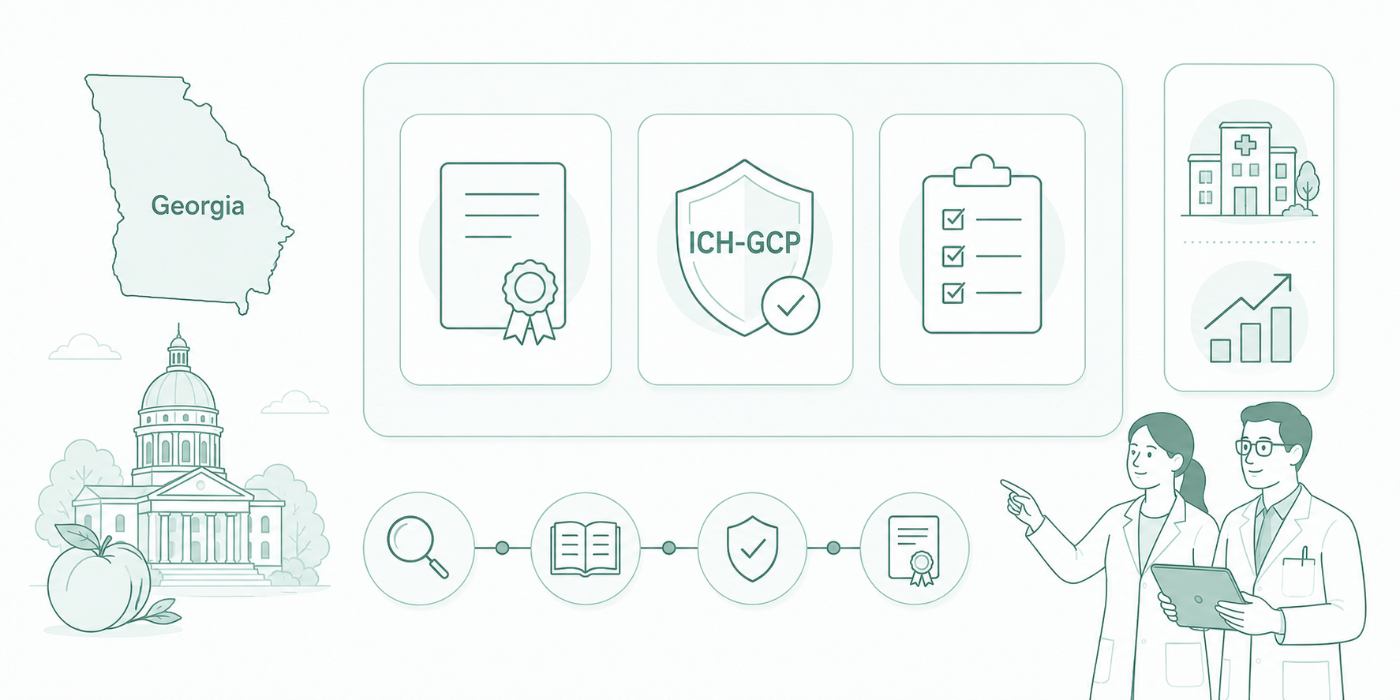
1. Why ICH-GCP Certification Matters in Georgia in 2026-27
Georgia is a practical clinical research state because the strongest opportunities are tied to real execution: enrollment quality, informed consent accuracy, source documentation, monitoring readiness, deviation control, and safety reporting. Anyone comparing clinical research certification in Georgia, site monitoring visits, patient retention strategies for CRCs, and GCP monitoring techniques quickly sees the same pattern: employers trust candidates who can prevent errors before they become audit findings.
ICH-GCP certification matters because Georgia sites, academic research teams, hospitals, sponsors, and CRO vendors need people who understand patient protection and data credibility at the same time. A coordinator who understands protocol deviations, adverse event reporting compliance, clinical trial data integrity, and ethical conduct in GCP becomes useful faster because they know where mistakes usually begin: rushed consent, vague source notes, late safety escalation, incomplete delegation logs, undocumented training, and “minor” deviations that repeat until they become systemic.
The biggest mistake Georgia candidates make is treating GCP as a checkbox. Hiring managers rarely need someone who can define “informed consent” from memory. They need someone who can spot a consent timing issue, protect a vulnerable participant, document a protocol exception, escalate a serious adverse event, and explain why the site’s workflow protects the trial. That is why your ICH-GCP training should connect directly to investigator responsibilities under GCP, clinical trial safety monitoring, remote and on-site monitoring visits, and quality management strategies.
A strong GCP certificate helps new Georgia applicants speak the language of clinical operations. It helps CRCs explain documentation decisions, CRAs evaluate site risk, regulatory assistants maintain approval trails, safety associates understand reporting urgency, and research assistants avoid casual mistakes that can compromise participant rights. If you are building a career path from entry-level site work into monitoring, project management, pharmacovigilance, regulatory affairs, or principal investigator support, use GCP as your operating system and build the rest around it through CRA career guidance, CRC certification pathways, pharmacovigilance best practices, and regulatory affairs mastery.
2. How to Choose the Right ICH-GCP Certification Program in Georgia
The right ICH-GCP certification program should make you better at decisions, not just faster at passing a quiz. Before choosing a course, ask whether it teaches practical consent protection, documentation standards, safety reporting, investigator oversight, trial technology, monitoring expectations, and risk-based quality. A Georgia learner who studies ethical conduct and patient safety, clinical trial amendments, protocol deviation corrective actions, and clinical trial sponsor responsibilities can speak more clearly in interviews because they understand how the trial ecosystem works.
A weak course usually feels convenient but shallow. It gives definitions, asks basic recall questions, and sends a certificate without forcing you to think like a coordinator, monitor, regulatory specialist, or safety team member. That becomes painful during interviews when the hiring manager asks, “What would you do if the participant signed the wrong consent version?” or “How would you handle a missed visit window?” Strong training should make you comfortable discussing informed consent compliance, site monitoring readiness, data review and verification, and adverse event reporting without sounding rehearsed.
Use four filters before enrolling. First, the course should align with current ICH-GCP principles and modern trial conduct, including technology-enabled documentation and quality-by-design thinking. Second, it should connect training to real job functions, especially CRC, CRA, regulatory, safety, and data roles. Third, it should give you language you can use in resumes, interviews, and internal site conversations. Fourth, it should prepare you for the messy situations that cause real findings: late entries, poor PI oversight evidence, uncontrolled documents, incomplete AE narratives, missing eligibility support, and sloppy delegation records. For deeper support, pair GCP learning with best clinical research certificate programs, clinical trial templates, global regulatory guidelines, and free clinical research training resources.
For Georgia professionals, the most valuable GCP certificate is the one you can explain with confidence. A resume line saying “ICH-GCP certified” is useful, but a stronger candidate can say, “My GCP training helped me understand consent version control, source documentation, AE escalation, protocol deviation prevention, and monitor-ready file maintenance.” That sentence feels different to employers because it connects training to risk reduction. If you are serious about moving from certificate-holder to job-ready candidate, map your training to clinical research salary expectations, clinical research career opportunities, professional associations, and online clinical research communities.
3. What Georgia Employers Expect After You Earn ICH-GCP Certification
Georgia employers expect certified candidates to understand that GCP is a daily behavior standard. The pressure is highest in patient-facing and documentation-heavy roles because one careless step can create a consent problem, safety delay, eligibility dispute, or data credibility issue. A strong candidate can connect participant education resources, patient retention strategies, clinical trial data integrity, and investigator oversight into one clear theme: protect the participant, protect the data, and prove both through documentation.
In interviews, employers often listen for operational maturity. They want to know whether you can identify risk before a monitor, auditor, sponsor, IRB, or FDA reviewer has to point it out. You do not need decades of experience to show that maturity. You need examples: how you would confirm the correct consent version, how you would document a missed assessment, how you would escalate an SAE, how you would prepare for a monitoring visit, how you would respond to an EDC query, and how you would avoid repeating the same deviation. Study SAE reporting procedures, clinical trial safety monitoring, pharmacovigilance audits, and global regulatory compliance in pharmacovigilance until your answers sound practical.
The strongest Georgia candidates also understand team behavior. Clinical research is full of handoffs: PI to coordinator, coordinator to monitor, regulatory to startup, data management to site, safety team to sponsor, and project manager to vendors. GCP certification becomes more valuable when you can communicate without creating ambiguity. Say exactly what happened, when it happened, who was informed, what document supports it, what risk remains, and what follow-up is needed. That kind of clarity pairs well with collaboration strategies for research assistants, leadership and team management, project close-out procedures, and conducting investigator meetings.
For resumes, do more than list the certificate. Add a skills line that includes informed consent, ICH-GCP, protocol compliance, source documentation, AE/SAE awareness, delegation logs, essential documents, monitoring readiness, and EDC query support. For interview prep, build three scenario stories: one about protecting participant rights, one about preserving data quality, and one about escalating risk. Then strengthen those stories with risk-based monitoring, clinical trial cost awareness, sample size context, and quality management strategies.
What is your biggest ICH-GCP certification blocker in Georgia right now?
Choose one. Your answer points to the fastest practical fix.
4. Step-by-Step Path to Getting ICH-GCP Certified in Georgia
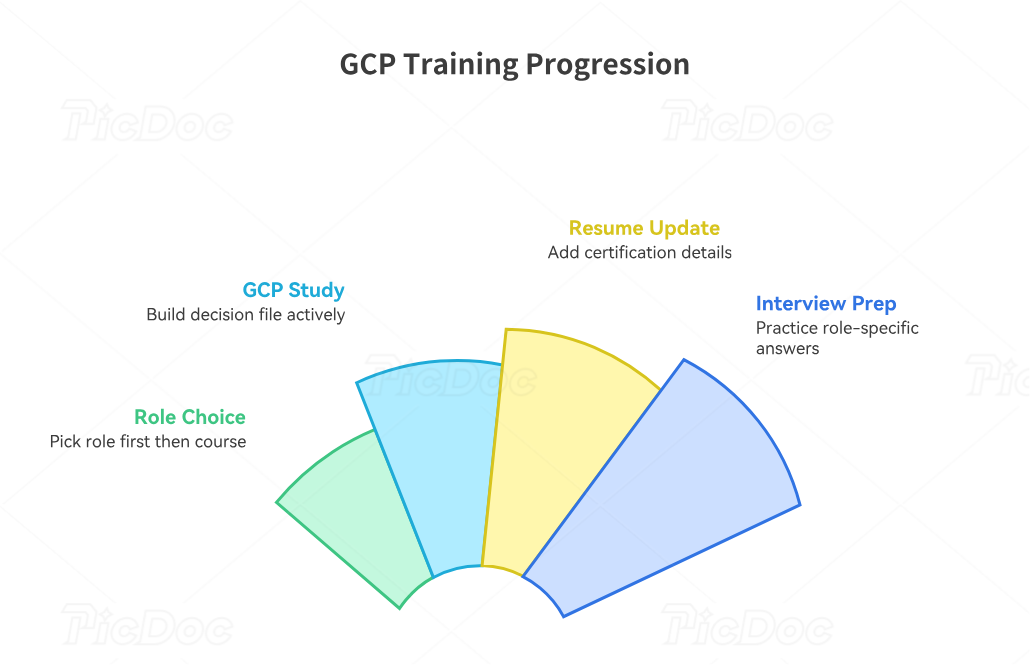
Start by choosing your target role before choosing your course. A future CRC needs GCP plus site workflow, patient communication, consent, scheduling, source documentation, and visit-window discipline. A future CRA needs GCP plus monitoring judgment, risk review, escalation, and site relationship skills. A regulatory assistant needs GCP plus approval trails, essential document control, IRB awareness, and version discipline. A safety associate needs GCP plus AE/SAE seriousness, narrative clarity, and reporting urgency. Use clinical research certification Georgia, CRA certification in Europe, CRA certification in Dubai, and clinical research certification California to compare how portable your skills should be.
Next, complete the GCP training with a notebook open. Do not passively click through modules. Build a personal “GCP decision file” with five sections: informed consent risks, source documentation rules, protocol deviation examples, AE/SAE escalation triggers, and inspection-ready evidence. For each section, write one interview answer and one site action. Then connect those notes to clinical trial amendments, protocol deviation CAPA, IND application basics, and clinical trial sponsor responsibilities so your knowledge moves beyond course slides.
After certification, update your resume immediately. Add the certificate name, completion date, and a skills cluster that shows practical value. A strong version might read: “ICH-GCP certified; trained in informed consent principles, participant safety, protocol compliance, source documentation, AE/SAE awareness, essential documents, and monitoring readiness.” Then add role-specific proof. For CRC roles, mention visit coordination and patient-facing documentation. For CRA roles, mention monitoring readiness and risk-based review. For regulatory roles, mention essential documents and version control. Strengthen the resume further with clinical research salary data, global career opportunities, clinical research professional associations, and clinical research networking communities.
Finally, practice Georgia-specific interview answers. Avoid saying, “I am passionate about research” as your main proof. Say how you would protect consent, verify eligibility, document source, escalate safety, prepare for monitoring, and prevent repeat deviations. Hiring teams remember candidates who understand pressure. They know certification is easy to list and harder to apply. Your edge comes from showing that your GCP training makes the site safer, the data cleaner, and the sponsor relationship easier to manage. Keep sharpening that edge with remote monitoring mastery, risk-based monitoring strategies, data review skills, and project timeline management.
5. Common GCP Certification Mistakes Georgia Candidates Should Avoid
The first mistake is choosing training only because it is fast. Speed helps when the training is still credible, practical, and aligned with modern GCP expectations. Speed hurts when the certificate leaves you unable to answer basic operational questions. Georgia candidates should avoid any course that treats GCP as a vocabulary quiz instead of a patient-safety and data-quality framework. Stronger preparation connects GCP compliance self-assessment, ethical patient safety, investigator responsibilities, and adverse event reporting into one practical workflow.
The second mistake is ignoring documentation. In clinical research, undocumented work can look like unfinished work. A coordinator may have called the participant, checked the chart, clarified a medication, or noticed an AE, but the trial record must still show what happened. Poor documentation creates pain later during monitoring, audits, database lock, sponsor review, or inspection. Build habits around contemporaneous notes, clear corrections, complete source, version control, delegation evidence, and query response rationale. Study clinical trial data integrity, clinical trial data review, clinical trial templates, and project close-out procedures until documentation feels like risk control.
The third mistake is separating GCP from patient experience. Participants leave studies when communication is confusing, scheduling is chaotic, visit burden is ignored, or trust breaks down. GCP is not only about files and forms; it is also about respect, informed choice, safety, privacy, and consistent follow-through. Georgia candidates who understand this can support recruitment and retention without crossing ethical lines. Pair your GCP training with patient retention strategies, patient education resources, patient influencers in clinical research, and Gen Z clinical trial expectations to understand where patient behavior and compliance pressure now meet.
The fourth mistake is getting certified and then waiting. A certificate should trigger action: update your resume, create a LinkedIn skills summary, apply to site roles, join professional communities, review job descriptions, practice scenario answers, and study one disease-area workflow. If you wait until you “feel ready,” faster candidates will pass you with sharper proof. Use your certification as the first move, then deepen it through oncology research resources, neurology trial sites, cardiovascular trial sites, and infectious disease trial sites.
6. FAQs About Getting ICH-GCP Certification in Georgia
-
Many Georgia clinical research employers strongly prefer or require GCP training because it supports participant protection, protocol compliance, and data credibility. The requirement depends on the role, employer, sponsor, and trial type. A new CRC, CRA, regulatory assistant, research assistant, or safety associate should treat ICH-GCP certification as a baseline career asset. It becomes stronger when paired with Georgia clinical research certification, site monitoring knowledge, investigator responsibility training, and clinical trial safety monitoring.
-
Many learners can complete GCP training quickly, but the better question is how long it takes to become interview-ready after certification. Plan enough time to study informed consent, documentation, protocol deviations, AE/SAE reporting, monitoring expectations, and essential documents. A rushed certificate may help you apply, but practical understanding helps you get hired and perform. Support your training with protocol deviation examples, SAE reporting guidance, GCP monitoring techniques, and clinical trial data integrity.
-
ICH-GCP certification is especially valuable for clinical research coordinators, clinical research associates, regulatory assistants, research assistants, safety associates, data coordinators, project assistants, and PI support staff. It helps each role understand patient rights, safety escalation, documentation expectations, and sponsor-ready trial conduct. Candidates can strengthen role alignment by studying CRC patient retention, CRA risk-based monitoring, regulatory guidelines worldwide, and clinical project management milestones.
-
List the certification name, completion date, provider, and job-relevant skills. Under your skills section, include ICH-GCP, informed consent, source documentation, protocol compliance, AE/SAE awareness, essential documents, monitoring readiness, and EDC query support. Under experience, connect those skills to real tasks whenever possible. A stronger resume also reflects clinical research career opportunities, salary expectations, professional association involvement, and online research communities.
-
After GCP, study the workflow connected to your target role. CRC candidates should study consent, recruitment, retention, visit scheduling, source documentation, and deviation prevention. CRA candidates should study monitoring, SDV/SDR, site communication, escalation, and risk-based review. Regulatory candidates should study IRB submissions, approvals, version control, and essential documents. Safety candidates should study AE/SAE reporting, pharmacovigilance, and audit readiness. Build your next step through clinical trial startup checklists, pharmacovigilance best practices, remote monitoring mastery, and quality management strategies.
